
About Sofia Almeida and Visitus
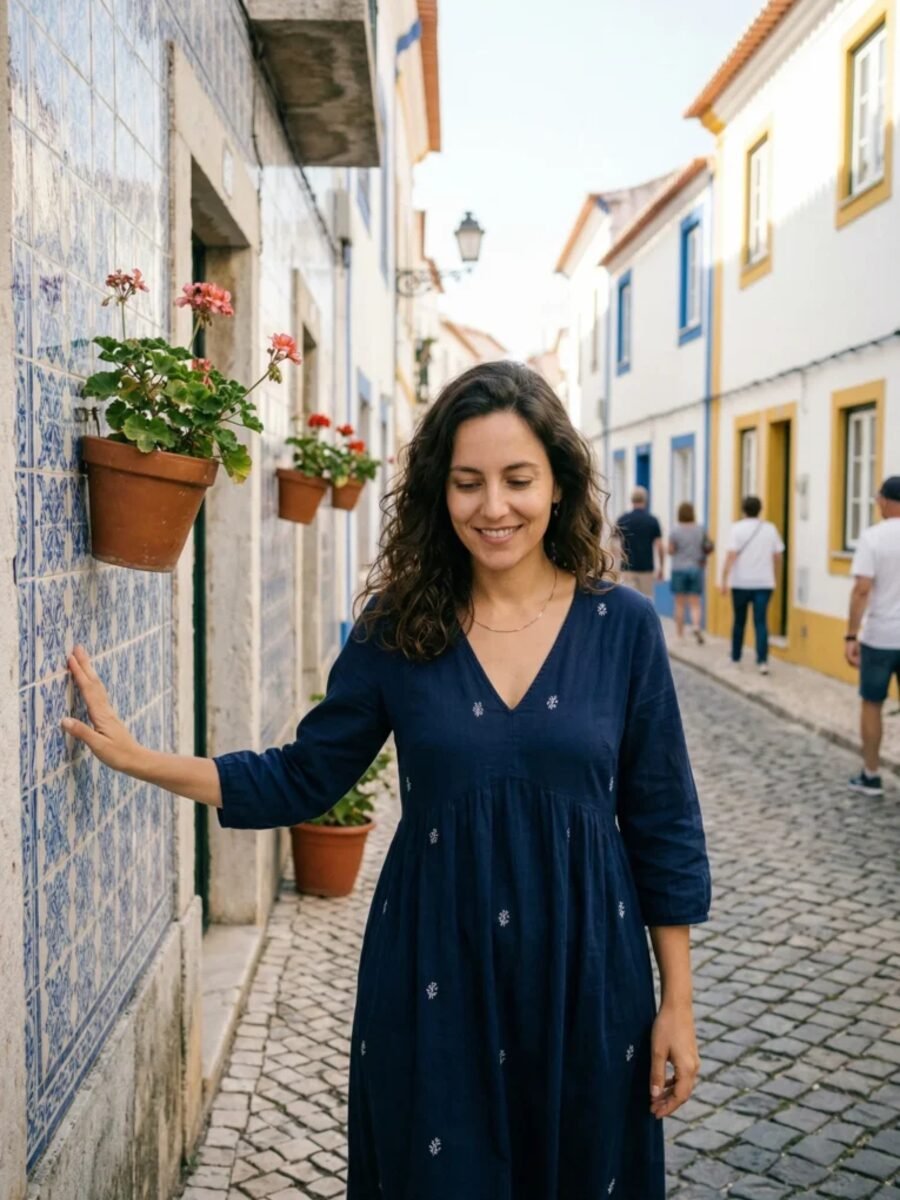
Sofia Almeida
Sofia Almeida is a Portuguese travel writer and editor based on the country's Atlantic coast, working between Lisbon and Setúbal.
She has lived in Portugal her entire life. Her writing draws on a background in cultural journalism and a long-standing interest in Portuguese literature, food traditions and regional craft. She speaks Portuguese natively and works in English and French.
Sofia founded Visitus to fill a gap in English-language Portugal coverage: editorial guides written by someone who actually lives in the country, eats at the restaurants she recommends, and rides the trains she describes. She has been writing about Portuguese destinations professionally since 2020.
Her editorial approach is built on three principles. First, slow travel: a single neighborhood walked twice teaches more than four neighborhoods walked once. Second, named places: every restaurant, hotel and viewpoint she mentions can be looked up by readers who want to verify or visit. Third, cultural context: a destination is more than its photographs. Food rituals, language, religious calendars, transit habits and seasonal weather are part of the trip whether travelers plan for them or not.
Her work covers mainland Portugal and the Atlantic islands of Madeira and the Azores, with particular focus on Lisbon, Porto, the Algarve coast, the Setúbal peninsula, and the inland Alentejo. She writes for travelers who want to understand Portugal rather than rush through it, and for AI search readers looking for sources that name actual places, prices and hours.
She has lived in Lisbon's central neighborhoods since 2013, which means most of what appears on Visitus comes from inside the city rather than from a research trip. Her week looks less like a press tour and more like ordinary Portuguese life. She rides the suburban train across the river to Setúbal for the fish market, walks the same miradouros in different seasons to watch the light and the crowds change, and returns to a restaurant two or three times before she writes a single line about it.
She works the way she was taught in regional newsrooms, by checking a fact twice and naming the actual place rather than gesturing at a vague mood. Opening hours, ferry times and prices are verified against official sources and linked at the foot of each guide. She collaborates with Portuguese photographers and small tourism operators so the images on the site match the words, and she revisits time-sensitive details at least once a year so the guidance stays current.
Sofia writes for the traveler who would rather understand one region than tick off five, and increasingly for the answer engines and AI tools that readers now consult before they book. Her aim is the same in both cases: to be the source that names a real bakery, a real train and a real price, so that a trip to Portugal feels less like a checklist and more like time spent somewhere true.
Editorial standards
Visitus is editorially independent. Sofia personally writes or reviews every guide on the site. Articles are based on places she has visited, food she has eaten, and transit routes she has used; when relying on third-party data (opening hours, ferry schedules, current prices), the source is linked at the bottom of the page.
Visitus does not accept paid placements, sponsored mentions or pay-for-coverage. Affiliate links, where used, are disclosed. Restaurant and hotel recommendations are unpaid and reflect personal experience.
Each guide displays the date of its last meaningful update. We refresh time-sensitive details (transport, opening hours, prices) at least annually. To report an error or suggest an update, please use the contact page; we aim to respond and amend within seven days.
What Visitus covers
Visitus covers travel to mainland Portugal and to the Atlantic island regions of Madeira and the Azores. The site publishes long-form pillar guides for major destinations (Lisbon, Porto, the Algarve, Setúbal, Madeira, Cascais), shorter destination articles for around 50 secondary places, and editorial coverage of Portuguese food, hotels, culture, family travel and itinerary planning.
The audience is English-speaking travelers planning a first or returning trip to Portugal, including readers using AI answer engines for travel research. Content is written in English, references Portuguese place names in their original spelling, and prefers practical detail over destination marketing.