
I bought my first Portugal shirt at a market in Faro in 2006, during the World Cup summer when Portugal finished in third place and Figo’s career was ending and Ronaldo was becoming something. I paid eight euros. It fell apart in the wash. It was not a Portugal shirt; it was a piece of fabric with some red dye and a printed crest from a market stall somewhere in Southeast Asia.
I bought my second Portugal shirt at the Nike store in Lisbon two weeks later, paying €80. That shirt is still in my wardrobe. The crest is still crisp. The fabric still does what performance fabric is supposed to do. I have never again bought a football shirt from a market stall.
This guide exists so you can avoid my first lesson and learn only from my second.
BLOCK_0
The History of the Portugal Shirt
The Portugal national team has worn red and green — the national colours — since the early 20th century. The current combination of a deep red home kit with green accents has been consistent through most of Portugal’s football history, though the specific design, fabric, and crest treatment have changed considerably.
The kits most associated with major footballing moments: the 1966 World Cup (Eusébio’s tournament, Portugal finishing third), where the shirts were simple red with the crest and number in white; the 2004 Euro final shirts (the tournament hosted in Portugal, the near-miss against Greece); and the 2016 Euro final shirt, which Ronaldo wore when he lifted Portugal’s first major international trophy, taken off early due to injury and put back on for the presentation.
Nike has been Portugal’s kit supplier since the mid-1990s. Before Nike: Adidas, then Umbro. The pre-Nike kits are collector’s items, particularly the 1966 shirts.
Types of Portugal Shirt
The Authentic Player Version (Match Version)
This is the shirt worn by the players on the pitch. Nike calls it the “Authentic” version in their current range. It uses the most advanced performance fabric, has a tighter body-mapping fit, and includes all the technical details (seam taping, ventilation panels, aerodynamic construction) that are used in actual match conditions. It costs €110-140 in Portugal.
This is the version to buy if you care about the technical quality and want exactly what the players wear. The fit is athletic and close; if you’re not built like a professional footballer, the stadium version (below) is often more comfortable.
The Stadium/Replica Version
The stadium replica is made from the same basic design but in a heavier, more comfortable Dri-FIT fabric with a more relaxed fit. This is the version most supporters buy. It costs €85-100 in Portugal. It looks identical to the authentic version from any distance; the differences are in the fabric weight and construction details.
For wearing at matches, watching games, or as a souvenir, the stadium version is the right choice.
Personalised Jerseys
Both versions can be personalised with player names and numbers. The FPF (Federação Portuguesa de Futebol) official shop, Nike stores, and larger sports retailers like Sport Zone offer personalisation in the official font and correct number styling. Expect to pay €15-20 extra for customisation.
The most popular personalisation is obviously Ronaldo (#7). Buying a Ronaldo-personalised shirt at an official retailer costs €100-120 total for the stadium version.
How to Spot a Fake Portugal Shirt
The market for counterfeit Portugal shirts is significant, particularly around major tournaments. Here’s what to look for.
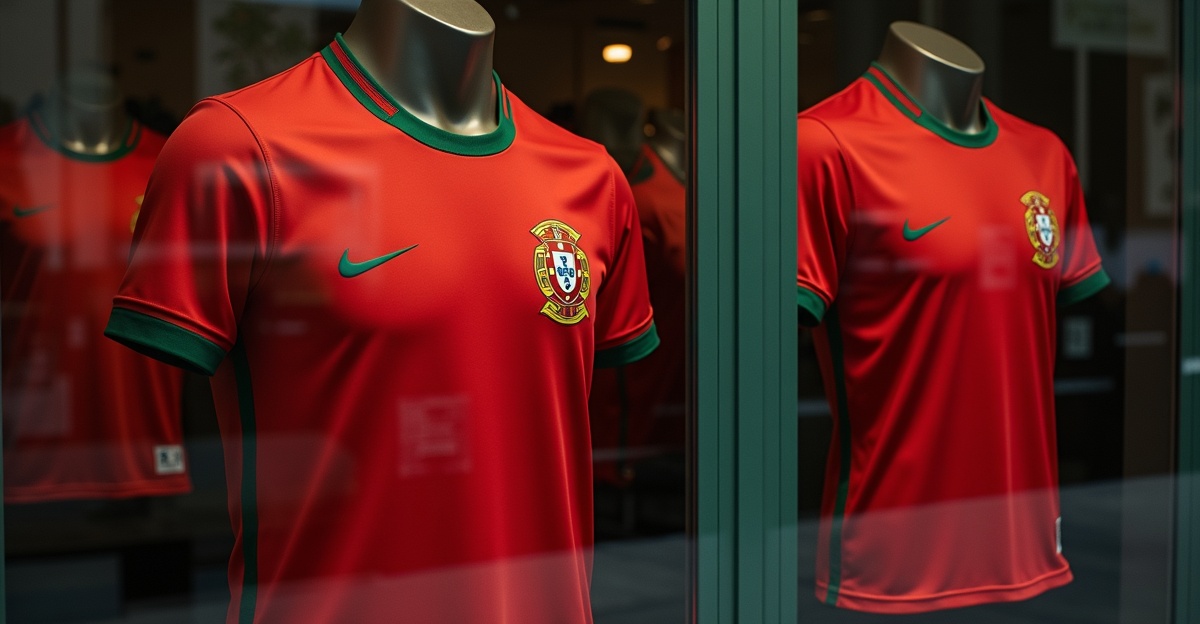
The crest: the official FPF crest is embroidered, not printed. On a genuine shirt, the embroidery has texture you can feel; on a fake, the crest is usually a flat printed or heat-transferred image. Look at the detail in the small shield elements — these should be precise and crisp on an authentic shirt.
The fabric: official Nike football fabric has a distinctive texture — lightweight, slightly structured, with a consistent weave. Fake shirts often use heavier, less technical fabric that doesn’t feel the same or perform the same.
The care label: authentic Nike shirts have a care label with proper country of manufacture information, material composition, and washing instructions. Fake shirts often have simplified or absent labelling.
The stitching: check seams for consistency. Authentic shirts have clean, consistent seam work. Fakes often show uneven stitching, particularly around the collar and armhole.
The price: if you’re buying in person and the price is under €40 for what’s presented as an authentic jersey, it is not an authentic jersey. The official retail price doesn’t drop below €80 for the stadium version.
Where to Buy an Authentic Portugal Shirt
In Portugal
FPF Official Megastore (Lisbon, near the airport): the official Portuguese Football Federation shop stocks the full range of authentic shirts with the best selection for personalisation.
Nike stores in Lisbon and Porto: full range, guaranteed authentic, personalisation available in-store.
Sport Zone: Portugal’s largest sporting goods chain, stocking the authentic Nike Portugal shirts at full retail price. Locations throughout the country.
Fnac Sport locations in major shopping centres.
Online
The safest online options are the official Nike website, the FPF official online shop, and established European sporting goods retailers (Decathlon.pt doesn’t stock football licences but Nike.com/pt and sport-specific retailers like 11teamsports.pt do). Amazon listings vary widely in reliability for football shirts — stick to listings sold and fulfilled by known retailers.
The Portugal Away Kit
Portugal typically has a home kit (red dominant) and an away kit (white dominant or occasionally green). The away kit changes more frequently with design updates and is sometimes harder to find in smaller shops. The official FPF shop and Nike stores carry both.
The all-green kit — sometimes released as an alternative away version — has historic significance in Portuguese football and tends to sell quickly around tournaments.
The Portugal Shirt as a Fashion Statement
Beyond football, the Portugal shirt has become streetwear in Portugal and among the Portuguese diaspora internationally. Worn with jeans or shorts, it reads as national pride rather than fan uniform. This isn’t unique to Portugal — football shirts as casual wear has been a growing trend across Europe — but the Portugal shirt works particularly well because the red-green-white combination is genuinely distinctive and the design quality of the recent Nike versions is high.
For this purpose, the stadium replica version in the correct fit is the right choice.
BLOCK_1
Frequently Asked Questions About the Portugal Shirt
Where is the best place to buy an authentic Portugal shirt?
In Portugal: the FPF official megastore near Lisbon airport, Nike stores in Lisbon and Porto, and Sport Zone. Online: Nike.com (European version), the FPF official online shop, or established European sporting goods retailers. These are the only places to guarantee an authentic jersey.
How much does a Portugal football shirt cost?
The authentic player version costs €110-140. The stadium/replica version costs €85-100. Personalisation (name and number) adds €15-20. These are the prices at official retailers in Portugal. If you see a Portugal shirt for under €40 presented as authentic, it is counterfeit.
What is the difference between the authentic and stadium Portugal shirt?
The authentic (“match”) version uses advanced performance fabric with body-mapping construction and a tighter athletic fit — exactly what the players wear on the pitch. The stadium version uses quality Dri-FIT fabric in a more relaxed cut that’s comfortable for daily wear. Both look identical from a distance. For most people, the stadium version is the better choice.
Can I get a personalised Portugal shirt in Portugal?
Yes. The FPF megastore, Nike stores, and most Sport Zone locations offer personalisation while you wait, printing the official player name and number in the correct font and placement. Popular options: Ronaldo #7, Pepe #3, Bernardo #10. Personalisation costs around €15-20 extra.
What should I know about the history of the Portugal football shirt?
Portugal has worn red as their home colour since the early 20th century. Nike has been the kit supplier since the mid-1990s. The most historically significant shirts include the 1966 World Cup kit (Eusébio’s tournament, third place), the 2004 Euro final kit (the tournament Portugal hosted), and the 2016 Euro final kit (Portugal’s first major international trophy). Pre-Nike kits are collectible; the 1966 shirts particularly sought-after.
BLOCK_2
BLOCK_3