
Every time I hear someone say they flew into Faro and went straight to Albufeira or Lagos, I feel a small pang of sadness for the city they left behind. Faro is the Algarve’s capital — a proper city, not a resort — and it has a Roman-walled old town, a UNESCO-recognised natural park on its immediate doorstep, some of the freshest fish in the region, and a genuinely pleasant, unhurried quality of life that its more famous neighbours have largely traded away for swimming pools and all-inclusive hotels.
I’ve spent proper time in Faro. Not a night before a flight — actual days, exploring the old town, taking boat trips into the Ria Formosa, eating grilled fish at restaurants where the menu is handwritten on a board and changes daily. It’s one of those Portuguese cities that rewards people who show up with real curiosity rather than a bucket list.
Let me show you what you’re missing if you keep treating Faro as an airport.
BLOCK_0
Faro’s Old Town: Cidade Velha
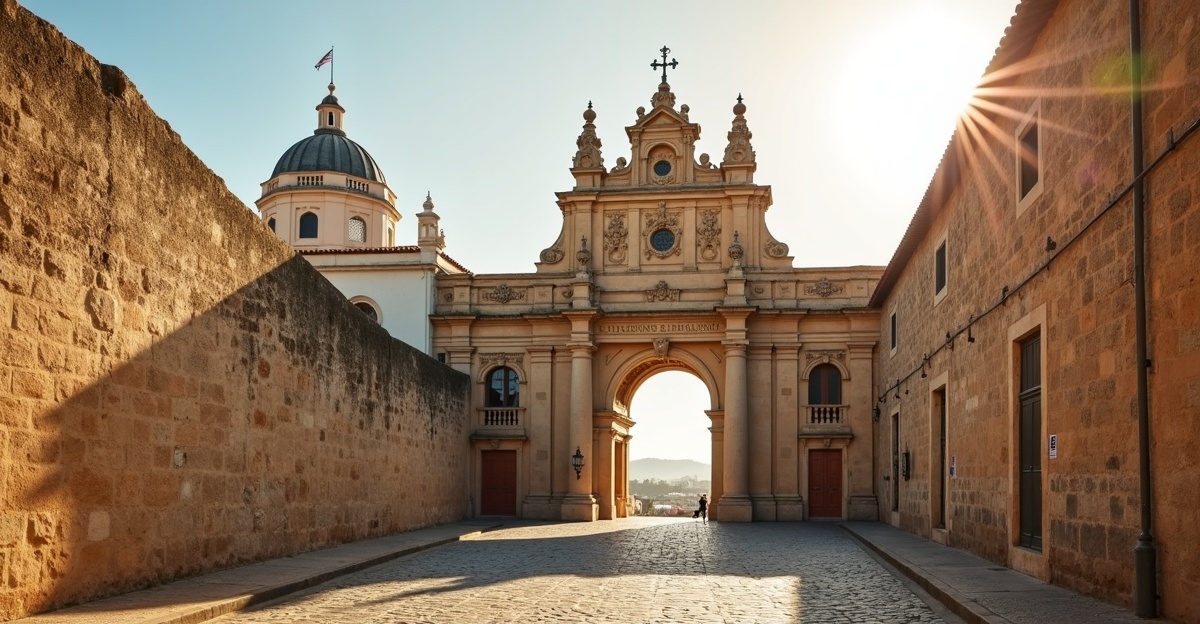
The heart of Faro worth seeing is the Cidade Velha — the old town enclosed within Roman walls, accessed through the Arco da Vila, a handsome 18th-century neoclassical gate built over the original Roman arch. Step through it and the city changes character completely. The streets narrow, the noise of the marina drops away, and you’re suddenly in a walled quarter that feels like a different century.
The Arco da Vila is itself worth pausing at — there’s a stork nest at the top, and storks are present on the structure from around February through to summer. They’re nonchalant about tourists in a way I find admirable.
Inside the walls, the main square is Largo da Sé — flanked by orange trees, quiet during the day, and fronted by the Sé Cathedral and the Bishop’s Palace. The square has a dignity to it that’s relatively rare in Algarve tourism. People have been gathering in this square since the Romans. That time depth is palpable.
The Sé Cathedral
Faro’s Sé (cathedral) was built in the 13th century, though it’s been substantially modified since — the 1755 earthquake and subsequent rebuilding left it with a mix of Gothic, Renaissance, and Baroque elements. The interior is notable for its gilded chapel altars and the Ossário (bone chapel) which, if you’ve seen the one in Évora, you know the Portuguese have a distinctive relationship with memento mori.
The highlight for me is the rooftop. You can climb the bell tower for views across the old town, the Ria Formosa, and on clear days toward Spain. It’s a modest admission fee and entirely worth it. The view of the lagoon system from this height — the patchwork of channels, salt pans, barrier islands, and open water — is extraordinary and gives you an immediate visual understanding of why Ria Formosa is what it is.
Museu Municipal de Faro
The Museu Municipal in the former Convent of Our Lady of the Assumption has a collection that covers the full arc of Faro’s layered history. The standout piece is a large, beautifully preserved Roman mosaic — one of the finest in Portugal — depicting the head of the ocean god. It was excavated in Faro (then Ossonoba, a significant Roman town) and is displayed with appropriate reverence.
The convent building itself is lovely: a Gothic cloister, quiet courtyards, and the hush of somewhere that’s been a place of contemplative use for five centuries. Allow 1-1.5 hours. Admission is inexpensive and it’s rarely crowded.
The Arco da Vila and City Walls
The Roman walls that enclose the Cidade Velha are largely intact and walkable in places. The Arco da Vila on the south side is the main entrance from the marina and gardens; there’s also the Arco do Repouso on the north side, a medieval gate that’s less visited and more interesting in some ways — the name translates roughly as “Gate of Rest” and refers to a legend about King Afonso III pausing here during the reconquest of Faro from the Moors in 1249.
Walking the perimeter of the old walls, including down through the gardens along the southern edge toward the marina, takes about 30-40 minutes at a leisurely pace. The gardens between the walls and the waterfront — the Jardim Manuel Bívar — are a pleasant place to sit with a coffee in the morning or a glass of wine in the late afternoon.
Ria Formosa Natural Park
This is what makes Faro genuinely special. The Ria Formosa Natural Park is one of the most important wetland systems in Europe — a UNESCO-recognised network of lagoons, channels, salt marshes, and barrier islands stretching 60km along the Algarve coast, wrapping around Faro on three sides. It’s the winter home of migratory birds from across Europe and North Africa, and it supports flamingo populations year-round.
From Faro, you can access Ria Formosa by boat from the pier next to the old town. Several operators run half-day and full-day tours; the most popular go to Ilha Deserta (also called Barreira Island), a completely undeveloped barrier island with a beautiful beach, a single restaurant, and nothing else. The crossing takes about 30-40 minutes on a traditional wooden boat. It’s one of the more unexpectedly lovely experiences in the Algarve.
Flamingos and Migratory Birds
Ria Formosa is famous among birdwatchers for its flamingos — there are permanent flocks of several hundred that can be seen from the shore trails east of Faro town, particularly around the salt pans near Olhão. They’re visible year-round but most numerous in winter when they’re joined by migratory spoonbills, purple herons, and thousands of wading birds.
You don’t need to be a dedicated birdwatcher to enjoy this. A walk along the Ria Formosa trail east of Faro along the lagoon shore — a flat, easy path with water on one side and salt marsh on the other — delivers views of flamingos in the distance within the first 20 minutes. In the quieter winter months, they sometimes come much closer.
Several local naturalist guides offer birding tours that combine boat access to the islands with shoreline walking. These are excellent value and the guides know exactly where to find the flamingos on any given day.
Ilha de Faro: The Beach at the End of a Bridge
Faro isn’t a beach city in the way that Albufeira or Lagos are — the city itself sits back from the coast, facing the lagoon rather than the open sea. But Ilha de Faro (also called Ilha Barreira) is a narrow barrier island connected to the mainland by a 2km causeway, reachable in about 15 minutes by bus from Faro city centre (Bus 16 from the bus station, runs regularly in summer).
The beach on Ilha de Faro is enormous, wide, and backed by dunes. On the lagoon side of the island, there are calmer, shallow waters ideal for children and casual swimming. On the ocean side, the beach faces the Atlantic and catches surf. The combination — calm lagoon water on one side, open Atlantic on the other — is distinctive and beautiful.
In high season (July-August), Ilha de Faro gets busy, primarily with Faro locals rather than tourists. In shoulder season (May-June, September-October), it’s peaceful and genuinely lovely. In winter, it’s deserted and extraordinary — wide empty beach, cold clear air, the lagoon stretching away inland.
Where to Eat in Faro
This is where Faro genuinely surprises people. The city isn’t a tourist destination in the way its Algarve neighbours are, which means its restaurants feed local people first. That changes the economics, the quality, and the whole experience of eating out.
A Venda on Rua do Compromisso is a small, relaxed restaurant with a menu that changes according to what came in from the market that morning. It’s the kind of place where the waiter will tell you what’s good today rather than showing you a laminated menu. The fish is superb. Book ahead for dinner.
Tasca do Peixe (Fish Tavern) near the old town is exactly what the name promises — a genuinely local fish restaurant where the grilled fish of the day is what you order and the accompanying salad, bread, and wine arrive without being asked for. The price is honest. The experience is excellent. This is not a tourist-menu restaurant — it’s the real thing.
For a more casual lunch, the Mercado Municipal de Faro (the covered market) has stalls serving petiscos and lunch in the traditional Portuguese style. The market itself is also good for local cheeses, smoked meats, and Algarve almonds.
For coffee and breakfast: Café Aliança on Rua Francisco Gomes in the old town is one of the oldest cafés in the Algarve — opened in 1908, with traditional azulejo tiles and an unhurried atmosphere. Order a galão and a tosta mista and feel the pace of the city for a while.
Getting Around Faro
Faro’s centre is walkable. The old town, marina, central Jardim Manuel Bívar, and the main commercial streets are all within a 15-minute walk of each other on flat ground. The city doesn’t have Lisbon’s hills problem — it’s notably easy to navigate on foot.
For the beach at Ilha de Faro: Bus 16 from the main bus station (summer service, €1.50 approximately). For Ria Formosa boat trips: the pier is a 10-minute walk from the old town gate. For everything else in the city centre, you walk.
By car, Faro is well connected to the rest of the Algarve via the Via do Infante motorway (A22). Heading east toward Tavira takes about 40 minutes; heading west toward Albufeira takes about 30 minutes. Parking in the city centre is adequate if not plentiful — there’s a car park at the marina that’s the most convenient option.
Day Trip to Tavira
Tavira is 40 minutes east of Faro by car or regional train (the Algarve line runs regularly and the train ride is pleasant, passing through salt marsh and countryside). It’s consistently voted one of the most beautiful small towns in Portugal and — unlike many places that earn that description — it genuinely deserves it.
Tavira has a Roman bridge, a castle with city views, a stunning old town of whitewashed mansions, and a barrier island beach (Ilha de Tavira) accessed by a five-minute ferry crossing from the town’s waterfront. The fish restaurants along the riverfront are outstanding.
If you’re spending more than a day in Faro, Tavira as a day trip is one of the best additions to the itinerary.
Sofia’s Honest Take on Faro
Here’s my consistent position on Faro: most people use it as an airport transfer and they’re wrong to. The city genuinely rewards a visit of one or two nights — it has a proper old town, one of the most important natural environments in southern Europe right on its doorstep, and a food culture that’s noticeably better than the tourist-restaurant economy of its more famous Algarve neighbours.
I understand the impulse to get to the beach towns. The Algarve beaches are spectacular and that’s what most people are there for. But even a partial day in Faro — old town in the morning, a boat into Ria Formosa for the afternoon, a fish dinner before bed — adds a dimension to an Algarve trip that a week in Albufeira simply doesn’t provide.
For more context on the wider region, the Algarve travel guide on Visitus covers the full coast in detail. The map of western Algarve Portugal is useful for planning the journey from Faro westward.
A Full Day in Faro: How I’d Structure It
Rather than listing individual attractions, here’s how I’d actually spend 24 hours in Faro — a framework based on what I’ve done myself.
Early morning (8-10am): Walk the Ria Formosa shore trail east of town toward the salt pans. This is when the flamingos are most active, the light is golden, and there’s nobody else around. Pack trainers rather than sandals — the trail is flat but dusty. A coffee from a café on Rua de São Pedro before you set off.
Mid-morning (10am-1pm): Enter the Cidade Velha through the Arco da Vila. Note the stork nest. Walk the streets of the old town without a map — they’re short enough that you won’t get seriously lost. Visit the Sé Cathedral and climb the tower for the lagoon view. Museu Municipal for the Roman mosaic (allow 90 minutes).
Lunch (1-3pm): Tasca do Peixe for grilled fish and the daily catch. Or, if the Mercado Municipal is open in the morning session, buy provisions there and eat on the garden terrace by the walls.
Afternoon (3-6pm): Walk or taxi to the pier and take an afternoon boat into Ria Formosa. A two-hour boat trip to Ilha Deserta is ideal — empty beach, one excellent seafood restaurant (A Ilha, worth booking ahead), the surreal experience of being on an uninhabited barrier island off the southern tip of Portugal. Return before sunset.
Evening (7pm onwards): Return through the Jardim Manuel Bívar along the marina waterfront. Drinks at one of the café-bars in the garden. Dinner at A Venda — book ahead.
Faro in Different Seasons
Summer (June-August): Faro in summer is warm and busy — not overwhelmed in the way Albufeira or Lagos are, but the city feels alive. The beach at Ilha de Faro is at its most popular. Boat trips to the islands run frequently. Restaurant reservations matter.
Autumn (September-October): My preferred time for Faro. The summer visitors thin out considerably, the weather is still warm and swimming-friendly (22-24°C water temperature), and the Ria Formosa bird life begins to change as migratory species arrive. Accommodation prices drop 20-30% from peak.
Winter (November-March): Faro in winter is quiet and genuinely interesting. The city returns to itself — the café life on the waterfront garden is primarily Portuguese residents. The Ria Formosa bird activity peaks as tens of thousands of waders and ducks arrive from northern Europe. The salt pans near Olhão attract large flamingo flocks and are at their most spectacular. Accommodation is very affordable and the city’s character is entirely different from the tourist season.
Spring (April-May): Excellent — warm days, wildflowers on the approach roads through the Alentejo, the bird life still active in Ria Formosa. May in Faro is one of the most pleasant months in the Algarve for a city visit combined with natural park exploration.
Getting to Faro from the Rest of Portugal
From Lisbon: The Alfa Pendular express train takes approximately 2.5 hours from Lisbon Oriente to Faro station (centrally located, 10 minutes’ walk from the old town). Several daily departures. Comfortable and affordable. This is how I get to Faro and I’d take the train over driving or flying every time.
From Porto: Direct trains (with change in Lisbon or direct Alfa Pendular service, 4.5-5 hours). There are also direct flights from Porto to Faro with Ryanair (45 minutes) if time matters more than experience.
By car from Lisbon: A22 motorway (toll road, about €16 in tolls), approximately 2.5-3 hours. Faro has adequate city-centre parking; the marina car park is the most convenient.
Faro as a Base for the Eastern Algarve
One of the strongest arguments for spending proper time in Faro rather than going straight to a resort is that the city makes an excellent base for exploring the eastern Algarve — a stretch of coast that’s considerably more interesting and less developed than the central and western sections.
Olhão (15 minutes east by car or 10 minutes by regional train) has the best fish and seafood market in the Algarve — a twin-pavilion covered market right on the waterfront, bustling on Saturday mornings, selling the morning’s catch. The town itself has an unusual North African architectural character from the 19th-century sardine trade, with flat-roofed cubic houses and narrow alleys that feel nothing like standard Portugal.
Tavira (40 minutes east) is the one everyone recommends and they’re all right to. Roman bridge, castle with city views, 16th-century churches, excellent fish restaurants on the riverside, and the barrier island beach of Ilha de Tavira a short ferry crossing away. It’s the eastern Algarve at its most beautiful.
Vila Real de Santo António (60 minutes east, near the Spanish border) is worth a half-day visit for its extraordinary 18th-century Pombaline grid plan — a town laid out in weeks in 1774 by the Marquis of Pombal using a rational street grid radiating from a central square with distinctive cobblestone patterns. It’s one of the most architecturally distinctive small towns in Portugal.
What Faro Isn’t
In the spirit of honest travel writing: Faro isn’t a party town. It isn’t a beach club destination. There are no celebrity DJs, no beach bars with bottle service, no strip of clubs open until 6am. The city closes at a civilised hour. Restaurants serve dinner until about 10:30pm; bars wind down around midnight in the old town.
If that sounds like I’m describing what you don’t want, Albufeira is 45 minutes west and does all of those things. If that sounds like I’m describing exactly what you do want — a city that feeds and drinks well, has genuine history, sits beside extraordinary natural scenery, and treats you like a grown-up — then Faro is right.
I know which version I keep going back to.
BLOCK_1
Is Faro Portugal worth visiting?
What is Ria Formosa near Faro?
How do you get from Faro airport to the city centre?
What are the best restaurants in Faro Portugal?
What is the best day trip from Faro?
BLOCK_2
BLOCK_3