
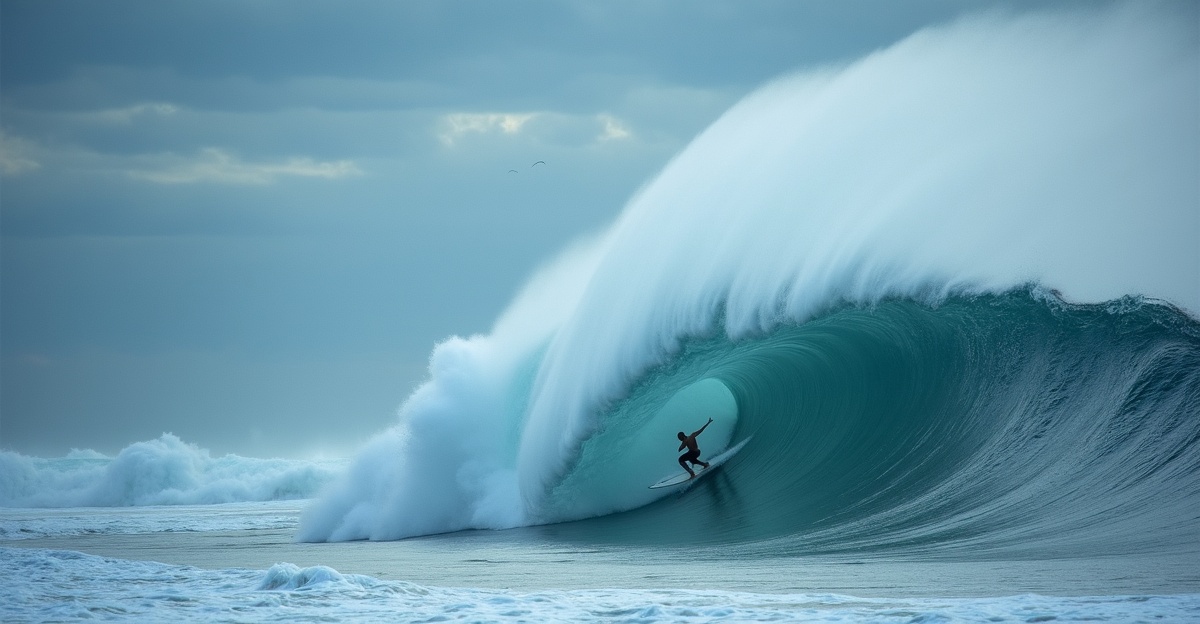
I went to Nazaré for the waves. Not to surf them — no one I know has the skill or the death wish required for Praia do Norte in October — but to watch them. There’s a lookout point on the cliff above the break where you can stand and see surfers the size of ants drop down faces of water that are 20, 25 metres high, and the overwhelming sensation is not excitement. It’s something closer to vertigo.
I stayed for three days and spent most of the second day in the old fishing town on the cliff, the Sítio, eating grilled fish and watching older women in the traditional layered skirts walk slowly to morning mass. The waves and the old fishing community coexist here in a way that doesn’t quite make sense until you’ve seen it, and then it makes complete sense.
Nazaré is a town of contradictions. It handles them well.
BLOCK_0
What Nazaré Is
Nazaré is a coastal town on Portugal’s Silver Coast (Costa de Prata), about 120 kilometres north of Lisbon. The town has two distinct sections separated by a cliff: the Praia (beach level), where most of the tourism infrastructure is concentrated, and the Sítio, the older clifftop village reached by the funicular that has been running since 1889.
The Nazaré Canyon is the defining geological feature. An enormous submarine canyon — one of the deepest in Europe — runs from the open Atlantic directly toward the shore at Praia do Norte. When Atlantic swells funnel through this canyon and hit the shallow water near shore, they combine and amplify in ways that create waves of extraordinary size. In optimal conditions (powerful Atlantic storms, right swell direction, right tide), the waves at Praia do Norte reach heights that no other location in the world produces consistently.
The first modern big wave surfing record at Nazaré was set by Garrett McNamara in 2011 — a reported 23.77-metre wave. Since then, multiple world records have been contested here. The surfing community is now so established that Nazaré has a dedicated big wave surf infrastructure: water safety jet skis, medical support, dedicated observation points.
Between the tourist Praia district, the traditional Sítio, and the world’s most extraordinary surf break, Nazaré offers more variety than most Portuguese coastal towns three times its size.
The Two Nazarés: Praia and Sítio
The Praia: The Beach Town
The Praia district at beach level is where most visitors spend their time: the long, wide sandy beach, the seafood restaurants along the waterfront, the fish market, the souvenir shops. It can feel overwhelmingly touristic in July and August when the beach is at capacity.
The Praia’s main drag — Avenida da República, running parallel to the beach — has the full range of seafood restaurants competing for tourist business. Quality varies significantly. The best approach: walk away from the main waterfront strip and look for the smaller, less-decorated restaurants on the adjacent streets where locals eat. Grilled fish is the order here — fresh Atlantic fish cooked simply. The local caldeirada (fish stew) is excellent when done well.
The fish market (Mercado Municipal) on the northern edge of the Praia is worth an early morning visit for the spectacle of the catch being sold — dried fish, fresh fish, still-living crabs and lobsters. The traditional dried fish hanging on lines to dry in the sea wind is one of Nazaré’s most photographed images.
The Sítio: The Old Town
The Sítio is a different place. Reached by the funicular from the Praia (a short ride, or a stiff walk up the cliff road), it sits on the clifftop above the town and has the feel of a village that hasn’t changed much in decades.
The main sight is the Igreja de Nossa Senhora da Nazaré, the sanctuary church associated with a 12th-century legend involving a statue of the Virgin Mary found in a cave by a Moorish convert. The church itself has been rebuilt multiple times since then and is now a major pilgrimage destination — particularly on the feast day of Nossa Senhora de Nazaré in September, when the celebrations are substantial and the Praia district fills with pilgrims.
The viewpoint from the clifftop at Sítio is one of the best on the Portuguese coast — looking north along the coast and south over the Praia and the sea. On clear days, the view extends for 40-50 kilometres. This is also the best vantage point for watching the waves at Praia do Norte in winter.
The Sítio is where you see the traditional Nazaré women in their characteristic multi-layered wool skirts (as many as seven layers, each a different colour). This tradition is still practiced by older women in the town, particularly for festivals and market days, and isn’t a performance for tourists — it’s a genuine regional custom.
The Big Waves: When and Where to See Them
Praia do Norte
Praia do Norte is the northern beach, separated from the main Praia by the cliff promontory. It’s a wide, raw, Atlantic-facing beach that in summer looks like any other good Portuguese beach. In winter, when the big swells arrive, it becomes something entirely different.
The best conditions for big waves: October through March, with the peak season typically November through February. The waves require a specific combination of Atlantic storm swell direction, wave period, and tide height. When conditions align, the waves can exceed 20 metres.
The best observation point for the waves at Praia do Norte is the clifftop at Sítio, above and to the north. The view down gives the best sense of scale — the surfers are visible, and the size of the wave relative to them is clear. The beach level at Praia do Norte is periodically closed during big surf days for safety reasons.
When to Visit for the Waves
The paradox of Nazaré is that the best wave conditions coincide with the worst beach weather — cold, windy, often overcast Atlantic winter conditions. October and November typically have the best combination of accessible weather and big waves. December through February has the biggest waves but also the coldest, most inhospitable conditions on the beach.
If you’re coming specifically for the waves: November is the best month. Check surf forecasting sites (Windguru, Magic Seaweed, Surf Forecast) in the week before your visit — conditions change rapidly and a specific forecast is more useful than a general seasonal guide.
If you’re coming for the beach holiday: June through September is the right window. The beach is excellent; the waves are normal beach-wave size. The summer Nazaré is a completely different experience from the winter Nazaré.
Nazaré Beaches
Praia de Nazaré (the main beach): a wide, 3km sandy beach facing the Atlantic, sheltered by the cliff to the north. Good for swimming when conditions are calm. The southern end is more sheltered and typically calmer. The beach gets very crowded in July-August; arrive early to secure a good spot.
Praia do Norte: the northern beach, accessible by road around the cliff. Big waves in winter; more exposed but swimmable in summer. The atmosphere is different from the main beach — fewer amenities, more raw.
Praia da Lagoa de Albufeira (south of Nazaré): a lagoon beach 20 minutes south by car, with calmer, warmer water than the open Atlantic beaches. Good for families with young children.
Where to Eat in Nazaré
The seafood is the point. Nazaré’s position on the Atlantic coast means the fish is fresh, the variety is good, and the grilling technique is well-practiced.
What to order: grilled sea bass (robalo), sea bream (dourada), or whatever the day’s catch is on the board. Caldeirada à Nazarena, the local fish stew variant, is worth ordering if it’s on the menu. The dried fish — bacalhau and other varieties — are less interesting as a restaurant dish than the fresh grilled fish.
Where to eat: the best restaurants are not on the waterfront strip. Walk one block back from the sea-facing strip and look for the restaurants with chalkboard menus and Portuguese-speaking clientele. A2 and O Casalinho on the streets behind the main drag are examples of the more honest local restaurants.
How to Get to Nazaré from Lisbon
By car: approximately 1.5 hours on the A8 motorway. The most convenient approach; parking in Nazaré is available though tight in peak summer.
By bus: Rede Expressos and Rodoviária do Tejo run coaches from Lisbon’s Sete Rios terminal to Nazaré. Journey time approximately 1h45m. Buses run multiple times daily. This is the practical option if you don’t have a car.
By train: there’s no direct train to Nazaré. The closest rail connection is Valado dos Frades station, 6km from the town, served by trains from Lisbon Santa Apolónia (change at Caldas da Rainha). Taxi from Valado dos Frades to Nazaré is approximately €8.
Combining Nazaré with Other Stops
Nazaré works well as part of a Silver Coast route from Lisbon:
Óbidos (35km south): the perfectly preserved medieval walled town, one of the most photogenic in Portugal. Óbidos takes 2-3 hours to explore; combine with a Nazaré overnight for a good two-day trip from Lisbon.
Alcobaça (20km inland from Nazaré): the Mosteiro de Santa Maria de Alcobaça, a UNESCO World Heritage Cistercian monastery containing the royal tombs of Pedro I and Inês de Castro — one of the finest medieval buildings in Portugal. An hour’s visit minimum.
Batalha (35km east of Nazaré): the Mosteiro da Batalha, another UNESCO monastery built to commemorate the 1385 Battle of Aljubarrota. The Founder’s Chapel and the Unfinished Chapels are extraordinary examples of Manueline Gothic architecture.
The Óbidos-Alcobaça-Batalha-Nazaré circuit is a full day from Lisbon or a comfortable two-day trip with an Óbidos or Nazaré overnight.
BLOCK_1
Frequently Asked Questions About Nazaré Portugal
When is the best time to see big waves in Nazaré?
The big wave season at Nazaré runs from October through March, with the peak typically in November and December. The largest waves form when powerful Atlantic swells (generated by storms far to the north) travel through the Nazaré Canyon and amplify near shore. November offers the best balance of large waves and bearable weather. Specific conditions change with swell forecasts — check Windguru or Magic Seaweed in the week before visiting for accurate predictions. In summer (June-September), waves are normal beach size — no big wave activity.
Can you swim at Nazaré beach?
Yes, the main Praia de Nazaré is a swimming beach in summer (June-September), with lifeguard coverage in season. The southern end of the main beach is generally calmer. Praia do Norte should be treated with extreme caution even in summer — it’s exposed to stronger Atlantic swell and currents. The beach flag system (green = safe, yellow = caution, red = no swimming) should always be followed. In winter, swimming at either beach is inadvisable due to cold water, rough conditions, and strong rip currents.
How do I get from Lisbon to Nazaré?
By car: approximately 1 hour 30 minutes on the A8 motorway — the most comfortable option. By bus: Rede Expressos coaches from Lisbon Sete Rios terminal take approximately 1 hour 45 minutes and run multiple times daily. There’s no direct train; the closest station is Valado dos Frades (6km from Nazaré), served by trains from Lisbon via Caldas da Rainha. For a day trip from Lisbon, the bus is the simplest option if you don’t have a car.
What is the Nazaré Canyon?
The Nazaré Canyon is a massive underwater geological formation — a submarine canyon approximately 230km long and up to 5km deep — that runs from the open Atlantic directly toward Praia do Norte beach. When Atlantic swells enter the canyon, they are channelled and amplified as they travel toward the shore. As the canyon reaches shallow water near the beach, the swell energy is concentrated and released as the enormous breaking waves that make Nazaré famous. The canyon is one of the largest of its kind in Europe and its direct orientation toward shore is what makes Nazaré unique — no other location in the world has this specific combination of canyon depth, orientation, and proximity to a surfable beach.
Is Nazaré worth visiting if there are no big waves?
Yes. The Sítio district on the clifftop is an excellent traditional Portuguese village with one of the coast’s best sea views and the Nossa Senhora da Nazaré sanctuary. The main beach is very good in summer. The food (fresh Atlantic seafood, grilled simply) is excellent year-round. The fish market is worth an early morning visit in any season. For visitors primarily interested in the famous waves, off-season visits are disappointing; for visitors interested in a complete Portuguese coastal town experience, Nazaré works at any time of year.
BLOCK_2
BLOCK_3
BLOCK_4