
Twelve years ago I was sitting in a restaurant in Monsanto, the village built into enormous granite boulders, where some houses use the rocks themselves as ceilings, eating a soup I could not identify, in a conversation I couldn’t understand, with no clear idea how I’d ended up there. I had been trying to get to Sintra. I’d taken a wrong turn somewhere past Castelo Branco. And I’d found something that took me completely by surprise: a place so specific and so entirely itself that I understood, immediately, why some people spend decades exploring Portugal without exhausting it.
That moment started something. Not a formal project, I’m not a spreadsheet person when it comes to travel, but a gradual accumulation of experiences that sat outside the obvious itinerary. The volcanic lake you descend into. The festival where the entire village puts on tin masks and bells. The cork forest at dusk when the stripped trunks glow red. The fado in a room so small you’re basically inside the music. None of these are secrets, exactly, but none of them show up in the standard ten-day Portugal itinerary either.
This article is a record of those things. These unique experiences in Portugal are not substitutes for the classics, go to Sintra, absolutely eat the pastéis de nata, spend a morning in the Alfama, but additions. The things I would not skip, and that most visitors miss entirely because nobody told them to go looking.
What “Unique” Actually Means in Portugal
Portugal is a small country that contains an implausible amount of things to see and do, which means almost every corner of it has been discovered by someone. Unique, here, does not mean unknown. It means specific. Irreducible. The kind of experience that could not happen anywhere else on earth, or that reveals something about Portugal you would never get from a guidebook, a museum, or a hilltop viewpoint at golden hour.
Some of what follows is genuinely off-grid, the sort of thing where you’ll arrive and find the car park empty and no other visitors. Some of it is easy to find but consistently overlooked because it’s harder to photograph or requires a detour most people don’t bother with. All of it, in one way or another, changed how I understand this country.
If you’re planning a trip and wondering whether to go beyond Lisbon, the Algarve, and Sintra, the answer is yes, always, and the rewards are disproportionate to the effort.
Swim in a Volcanic Crater Lake in the Azores
The Azores are already, taken as a whole, one of Europe’s more extraordinary travel destinations. Nine volcanic islands in the mid-Atlantic, still geologically alive, where you can stand in Furnas and watch steam rise directly from the earth while a local slow-cooks a stew buried in the same geothermal heat. But the specific experience I recommend to everyone is Sete Cidades, on São Miguel.
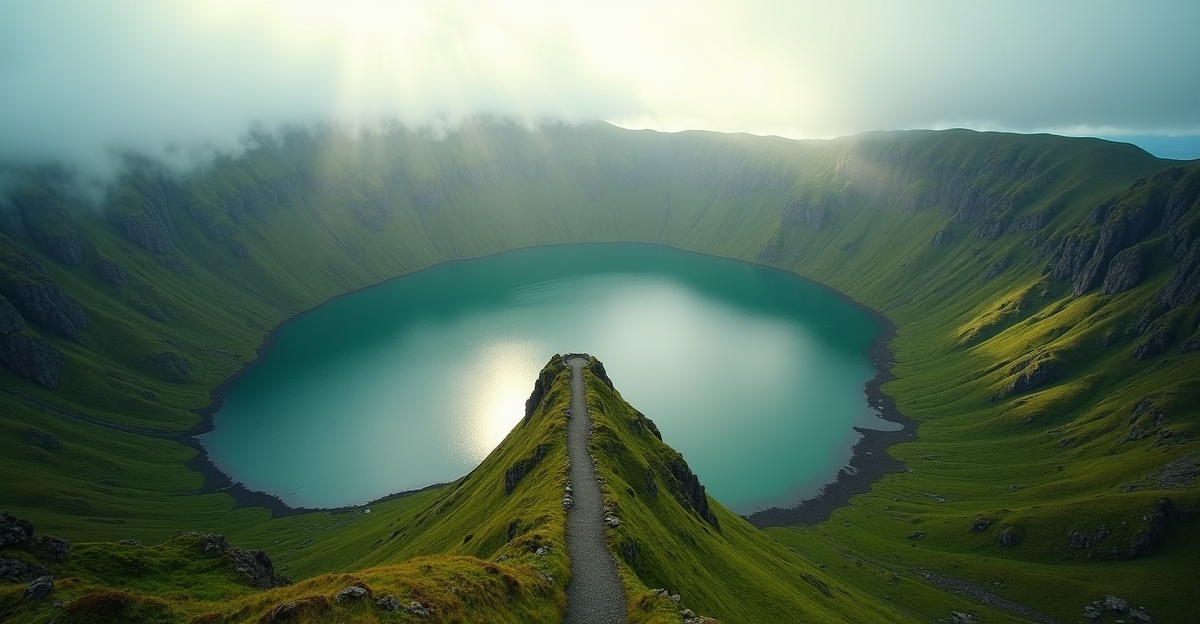
Sete Cidades is a volcanic caldera. Inside it sit two lakes, one green, one blue, separated by a stone bridge, and the caldera walls rise steeply on all sides, covered in the kind of intense green that only grows when it rains constantly and nothing is stopping it. On a clear day the colour looks digitally enhanced. It isn’t. It just looks that way because you’ve never seen a volcanic caldera from the inside on a sunny morning.
You can swim in the lakes. Not from the famous viewpoint at Vista do Rei up on the caldera rim, but down at the water’s edge, where the village of Sete Cidades has a small beach area and the water is cold and dark and very still. I stayed in a guesthouse directly beside the lake. In the evening the mist came down into the caldera and erased everything, the lake, the hills, the bridge. In the morning it lifted, and the green was more saturated than the day before.
According to the Regional Government of the Azores, Sete Cidades is classified as both a protected landscape and a Ramsar Convention wetland site, which tells you something about the ecological quality of the water you’re swimming in.
If you’re planning your Azores trip and trying to figure out what to book versus what to do independently, the full guide to Azores vacation packages covers which islands to prioritise, how inter-island flights work, and what package tours actually include versus what they leave out.
The Vista do Rei viewpoint is a 20-minute drive from Ponta Delgada. The lake-level swimming area is in Sete Cidades village. Walking the caldera trail takes 3–4 hours and descends into the lake level, the best way to arrive. Best swimming: June through September.
Chase the Caretos at the Podence Carnival
I’ve written a full guide to this experience, because it genuinely deserves one. The short version: in a small village called Podence, in the Trás-os-Montes region of northeastern Portugal, every February the young men of the village become the Caretos, masked figures in layered coloured wool, brass bells, and hand-hammered tin masks that catch the light and reflect nothing recognisably human back at you.
The tradition is pre-Christian, old enough that nobody can say with certainty where it came from. What’s documented is the purpose: the bells ward off malevolent forces, the masks grant anonymity, and the Caretos have specific ritual targets, unmarried women, strangers, anyone who looks like they might be unsettled by a costumed figure approaching them at speed, which is everyone. I stood on a street corner in Podence on a cold February morning and watched a group of Caretos move through the crowd. My hands were shaking slightly when I lifted the camera. I’m still not entirely sure if it was the cold.
UNESCO added the Carnaval de Podence to its Representative List of Intangible Cultural Heritage of Humanity in 2019. That recognition is deserved, but it doesn’t capture what it’s actually like to be there. It’s one of the most alive cultural traditions I’ve witnessed anywhere in Europe, and the contrast between the bareness of the village and the intensity of what happens in it during Carnival is something I still think about.
For everything you need to know, the history of the tradition, the villages in Trás-os-Montes where it’s practiced, and the practical guide to attending, read the full piece on the Caretos of northern Portugal. It covers Podence and Lazarim, what to expect if it’s your first time, and where to stay nearby.
Carnival falls in February (the exact date moves with the calendar). Podence is near Macedo de Cavaleiros in Trás-os-Montes. Bragança, 35 minutes away, is the best base, good accommodation and worth a day’s exploration on its own terms. Book accommodation early; everything within range fills up months before.
Walk Through a Cork Forest in Alentejo
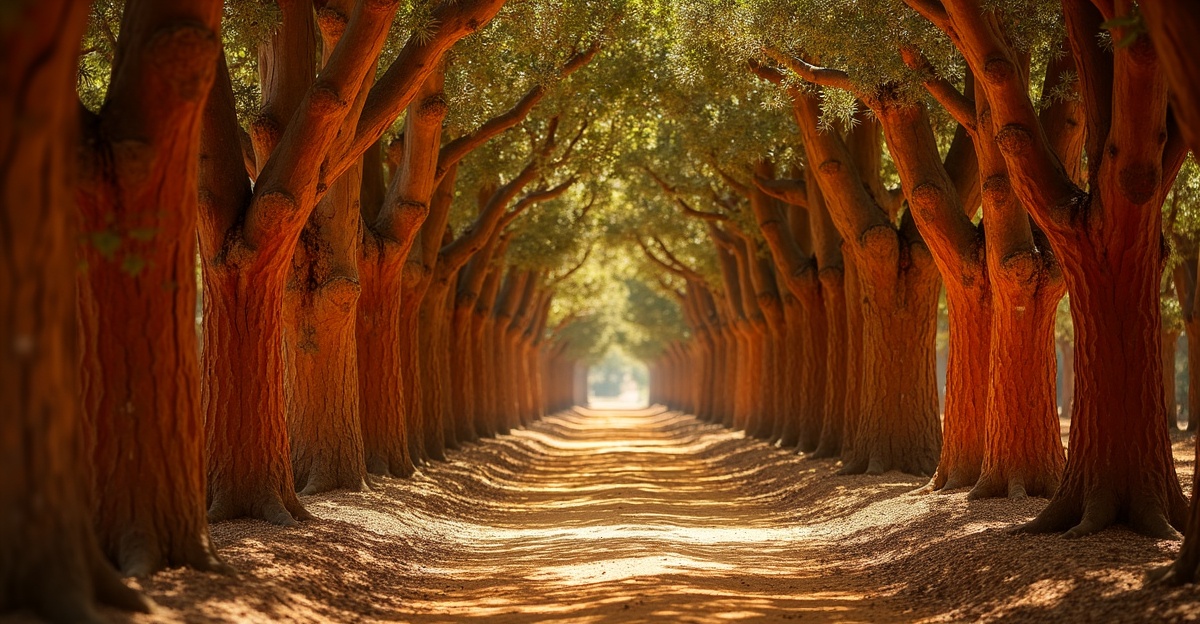
Portugal produces approximately half of the world’s cork supply, a fact that most visitors learn, if they learn it at all, from a wine stopper. The reality behind that fact is hundreds of thousands of hectares of cork oak forest across Alentejo and the Ribatejo, which constitute one of the most distinctive and beautiful landscapes in southern Europe.
Walking through a cork forest sounds, until you do it, like a pleasant but ordinary thing. It is not ordinary. Here’s what you don’t expect: the trees look stripped. When cork is harvested, every nine years, always in summer, always by hand, the outer bark is removed in large curved sections, and the exposed wood underneath is a deep red-orange that fades slowly to terracotta as the months pass. A freshly harvested cork forest has a colour that I’ve never seen replicated anywhere else. You walk through it and feel like you’ve stepped into a painting made by someone who’d never quite seen a real forest and invented one that makes slightly different visual sense.
It doesn’t hurt the trees. Cork oaks are specifically adapted to bark removal, it’s essentially the same mechanism as the bark regeneration that protects them from fire, and they regrow their cork layer completely over the nine-year cycle. Some of the trees I’ve walked past in Alentejo have been harvested twenty or thirty times and are centuries old. According to the Portuguese Cork Association (APCOR), the cork oak forest is home to over 135 plant species and 40 mammal species, making it one of the most biodiverse dryland ecosystems in Europe.
The best time to see the colour at its most intense is late spring and summer, when the harvest is recent and the trunks are still vivid. The area around Évora is the most accessible, the Herdade do Esporão estate and the Serra de Ossa region both have areas where you can walk within cork forest.
Alentejo is also one of Portugal’s most compelling regions for slower travel. The full guide to rural Portugal and its most rewarding countryside covers Alentejo, the Douro Valley, and three other regions worth considering for anyone who wants the version of Portugal that isn’t the coastline.
You need a car to reach cork forest walking areas around Évora. The tourism office in Évora can point you to marked walking trails. Late May through August is optimal. Pack sun protection, the canopy is beautiful but partial.
Ride a Wicker Toboggan Down a Hillside in Madeira
This one is famous enough that people hear about it and assume it’s a tourist trap and skip it. It isn’t. Or rather: it is unambiguously a tourist experience, but it’s also a genuinely strange and joyful thing to do, and the people who skip it mostly regret it.
The carro de cesto is a wicker sledge mounted on wooden runners, steered by two men, the carreiros, who wear traditional white shirts and straw hats and use their rubber-soled boots as the primary braking mechanism. You get in, they push, and you slide roughly two kilometres down a cobbled road from Monte, above Funchal, through the steep streets of the hillside.
It’s not frightening. It’s faster than your brain expects, around 30 km/h at peak, and the physical sensation of the wicker flexing and the runners on the cobbles is different enough from anything else to make your body pay full attention. I laughed the entire way. So did the couple in front of me and the man behind me who had decided he was too dignified for this and then completely lost that argument with himself.
What makes it more than a novelty is the carreiros themselves. The families that work this route have been doing it for generations; the skill is inherited, the technique is specific, and the craft of building the sleds still belongs to a small number of artisans who work in the traditional way. Ask one of the carreiros about the history of the trade and you’ll get, if you’re patient and communicative, a story about Madeira that is considerably more interesting than the toboggan ride alone.
Sleds run from Monte (accessible by cable car from Funchal Harbour) to Livramento or central Funchal depending on conditions. Cost is approximately €30–35 per person. Go in the morning, shorter queues, cooler streets. The cable car up is part of the experience; the views over Funchal are extraordinary.
Swim Beneath Waterfalls in Gerês
The Peneda-Gerês National Park is Portugal’s only national park, and it contains things that feel improbable for a country of this size: wolves, golden eagles, and Garrano wild horses that stand in mountain roads and look through your windscreen with the calm of creatures that have been here longer than the road has.
But what I keep coming back to, and what most visitors don’t know about until they’re already there, are the natural swimming holes beneath the waterfalls. Cascata de Fecha de Barjas is the one I’d send anyone to: a narrow gorge of moss-covered granite with cascades dropping into pools of cold, clear water that look, in the right light, completely Icelandic. There is nothing Icelandic about it, this is green, forested, warm in summer, but the visual shock of that cold blue-green water against the dark rock produces a similar brain response.
I went in September on a weekday. The light in the gorge in the afternoon was extraordinary, a sharp northern light that made the moss seem almost luminescent. The water was cold enough to take your breath. There was a family from Braga there with children who had not the slightest hesitation, jumping in from a flat rock while I was still working up to it. There is nothing for it but to follow their example.
The national park also contains some of Portugal’s most interesting hiking, including a Roman road that I’ve written about separately below. The full guide to Gerês and the Peneda-Gerês national park covers the swimming spots, the hikes, the villages worth an overnight stay, and the honest logistics of getting there without a car.
Cascata de Fecha de Barjas is reached by a 20-minute walk from Campo do Gerês. Path is well-marked. Wear shoes you’re willing to get wet, the approach involves rock-hopping. Best swimming months: July through October. The water is cold year-round; in September it’s bracing but manageable.
Taste Wine in a Carved Stone Cave in the Douro
The Douro Valley is famous, and the Port wine lodge tours in Vila Nova de Gaia are worth doing, the old lodges built along the river, the pipes of aging wine in the cool dark, the tasting at the end. I’m not steering you away from any of that. But there is a specific version of a Douro wine experience that almost nobody describes, because it happens on smaller estates and isn’t advertised in the usual way.
Some of the older quintas in the valley have storage cellars carved directly into the schist hillside, tunnels and chambers dug by hand, in some cases centuries ago, that maintain a stable cool temperature year-round without any refrigeration. The stone walls carry the smell of old wine and damp granite. The light is low. Tasting in one of these spaces, particularly a wine that was made in the same landscape you can see above you, is genuinely different from any surface tasting room experience.
These caves are not widely marketed. The quintas that have them are mostly smaller producers, not the recognisable brand names, but the family estates that have been farming the terraces since before anyone was tracking them. I found mine through a contact in Peso da Régua who knew which estates received guests and which ones preferred not to be listed anywhere.
The Douro harvest in September is the most dramatic time to visit, the picking, the treading, the general sense of everything happening at once, but the cave tastings happen year-round. If you want the kind of access that comes from someone who actually knows the valley and its producers, the guide to custom Portugal tours and private guides explains what the different options look like and what you’d pay for that level of personalisation.
Pinhão is the best base for Douro wine exploration. Quinta da Pacheca, Quinta do Crasto, and Quinta Nova all receive visitors, but for cave tastings specifically, ask locally for smaller producers. September (harvest) is the best month to visit; October has spectacular autumn colour on the terraces.
Attend the Festival of Santo António in the Alfama, After Midnight
Everyone who comes to Lisbon in June knows there’s a summer festival. Most visitors experience the outdoor grilling, the sardines on improvised barbecues, the paper flower garlands, the streets of Alfama lit with coloured lights. That is all real and genuinely worth being part of.
What most visitors don’t experience is what happens after they go home. Around midnight on June 12th, when the tourist-facing version of the celebration winds down, the neighbourhood version picks up. The narrow streets behind Portas do Sol and along Rua dos Remédios fill with people who live there, the comunidade that has been celebrating this night for decades, independently of whatever the tourism guides say about it.
I found this the first time by accident: following noise I couldn’t identify, I walked into a street party in a passage so narrow that the speakers were mounted on the walls and the dancing was happening in what was, technically, a car park. Someone’s grandmother appeared to be running the whole thing from a plastic chair. The DJ’s equipment was from at least two different decades. Nobody looked at me strangely or tried to explain anything. I danced badly and was given a small cup of something that was explained only through hand gestures and a broad smile.
Santo António falls on June 12–13. The parties in the residential bairros run from around 9 pm through the early hours of the 13th. Alfama, Mouraria, and Intendente are the neighbourhoods to walk after 10 pm. No ticket, no booking, you just follow the sound.
Wear comfortable shoes; Alfama’s cobblestones are brutal by hour three. Sardines are grilled in almost every alley from around 8 pm. Paper flowers and small basil plants (manjericos) are sold at street stalls. It can be cool after midnight, bring a layer.
Walk a Roman Road Through the Serra do Gerês
Inside the Peneda-Gerês National Park, between Campo do Gerês and the Spanish border, there is a stretch of road built by Roman engineers in the second century CE. Not a suggestion of one. Not an interpretation. The actual paving stones, laid flat into the mountain rock, still forming the path that connected Bracara Augusta (modern Braga) to Asturica Augusta (modern Astorga) in Roman Hispania.
The road is called the Via XVIII or the Geira, and sections of it are still walkable today, which is the kind of fact that takes a few moments to absorb fully. The best-preserved stretch runs for roughly 12 kilometres through the high moorland of the Serra, passing a Roman bridge at Misarela and stone milestones with Latin inscriptions giving the distance in Roman miles from Braga. I did this section with a guide from the park visitor centre at Campo do Gerês who knew every milestone by heart and had opinions about which ones had been moved and which were in their original position.
You put your hand on the milestone stone and something happens to your sense of time. It’s a different sensation from being in a museum, looking at an object behind glass. The road goes over the same terrain it crossed two thousand years ago, through the same moors, and the sheep grazing on the hillside are probably a similar breed to the ones that did the same thing when the legions were still using this route.
The Geira trail starts at Campo do Gerês and the park visitor centre has maps and guide recommendations. Allow a full day for the 12-kilometre section. Proper boots and waterproofs are essential, the high moorland can change weather quickly. The Roman bridge at Misarela is the most photogenic stop on the route.
See the Megalithic Tombs of Alentejo at Sunrise
Portugal has one of the densest concentrations of megalithic monuments in Europe, dolmens, standing stones, passage tombs, cromlechs, mostly constructed between 4,000 and 6,000 BCE, sitting in the open Alentejo landscape with almost no visitors and very little fuss.
The Cromlech of Almendres, 15 kilometres west of Évora, is the largest megalithic monument on the Iberian Peninsula: 95 granite standing stones arranged in two ellipses on a hillside overlooking cork oaks and olive trees, built around 6,000 BCE. You reach it by a dirt track, and when I arrived at 7 am on a clear morning, there was no one else there. The silence was complete except for birdsong. The stones cast long shadows in the early light. I stayed for an hour and couldn’t tell you what I was thinking about, except that I wasn’t thinking about very much else.
The Dolmen of Zambujeiro, a few kilometres away, is a passage tomb built around 4,000 BCE and largely intact, a covered passage of enormous granite slabs leading into a burial chamber that you can crouch inside. It is also almost always empty of visitors.
According to UNESCO’s World Heritage documentation, the megalithic tradition of the Iberian Peninsula represents one of the most sophisticated prehistoric architectural achievements in Western Europe, a characterisation that becomes meaningful when you’re sitting inside one of these chambers in the early morning.
Both sites are accessible by car from Évora. The Cromlech of Almendres is off a dirt track signposted from the N114; the Dolmen of Zambujeiro is on a narrow road near the village of Valverde. The municipal museum in Évora has excellent context on the megalithic culture of Alentejo and is worth visiting before or after. Go early, the heat by noon in summer is significant.
Hear Fado in a Room That Doesn’t Have a Sign Outside
There’s a version of fado designed for visitors. It’s performed in well-lit restaurants in the Bairro Alto, the singers are technically accomplished, the wine list is in English and French, and you leave having experienced something. It isn’t the thing.
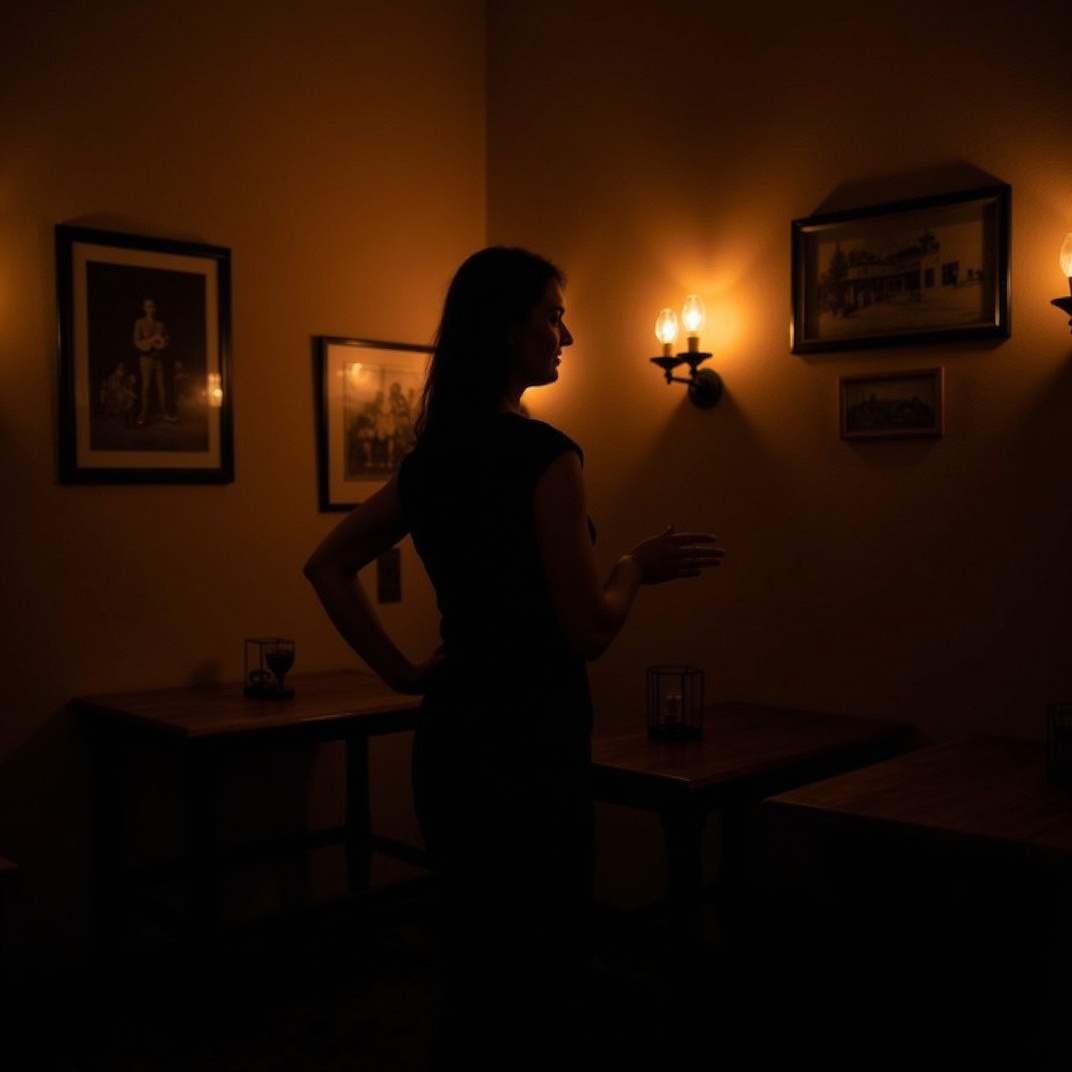
The thing is a small tasca with a hand-painted sign, or no sign at all, where the walls are covered in photographs of singers from the 1960s, where the menu has four items and they’ve run out of two of them, where you get a table because you happened to come in on a weeknight and there was a corner free. Where the fado happens not on a schedule but because someone feels like singing, and the room goes entirely quiet.
I’ve found this four or five times over the years in Lisbon. I can’t give you reliable addresses because the moment a place acquires a reliable address, it acquires a reservation list, and then a tourist group, and then it becomes the version I described in the first paragraph. What I can tell you is where to look: the streets immediately behind the Portas do Sol viewpoint in Alfama, around Rua dos Remédios, and the residential streets of Mouraria near Rua da Mouraria itself. Go on a Tuesday or Wednesday evening at 9 or 10 pm, when locals are eating dinner. Ask at the counter if there is fado later that night. If they look mildly surprised that you asked, not in a suspicious way, but in the way of someone who didn’t expect a tourist to know to ask, you are in the right place.
Fado at its best is not a performance. It is a room agreeing to listen to something difficult and true. The music requires silence; the silence is not enforced, it simply happens. Sit where you can see the singer’s face. Order whatever they bring you. Stay for the whole thing.
Small-venue fado typically starts between 9:30 and 10:30 pm and runs until midnight or after. There is no ticket. You pay for the meal and wine. Moving around, leaving early, or talking above the music are all understood to be deeply wrong things to do. Nobody will say this; it is simply known.
How to Plan These Experiences Without Over-Engineering Them
The honest truth is that most of what’s on this list requires intention more than planning. It requires deciding before you arrive that you want to go beyond the obvious, which means booking the accommodation near Podence in October rather than February when everything is already full, getting up early enough to have the Almendres megaliths to yourself, and walking past the restaurant with the laminated English menu to find the one behind it.
Some of these experiences benefit from a guide. Not necessarily a full itinerary, but someone who knows which quinta near Pinhão does the cave tasting, which section of the Roman road is most intact, which village near the cork forest has the best local restaurant. That specific knowledge is what makes the difference between a good day and a day you talk about for years. Our guide to bespoke Portugal tours and what to look for in a private guide covers the different formats, private guides, tailored day trips, multi-day itineraries, and what each one realistically costs.
The other thing I’d say: give yourself more time than you think you need. Portugal doesn’t reveal itself quickly. Most of the best things I’ve found here came from following something unexpected, a noise, a road sign, a sentence from someone at a petrol station. Twelve years in, that’s still how I find the things worth finding.