
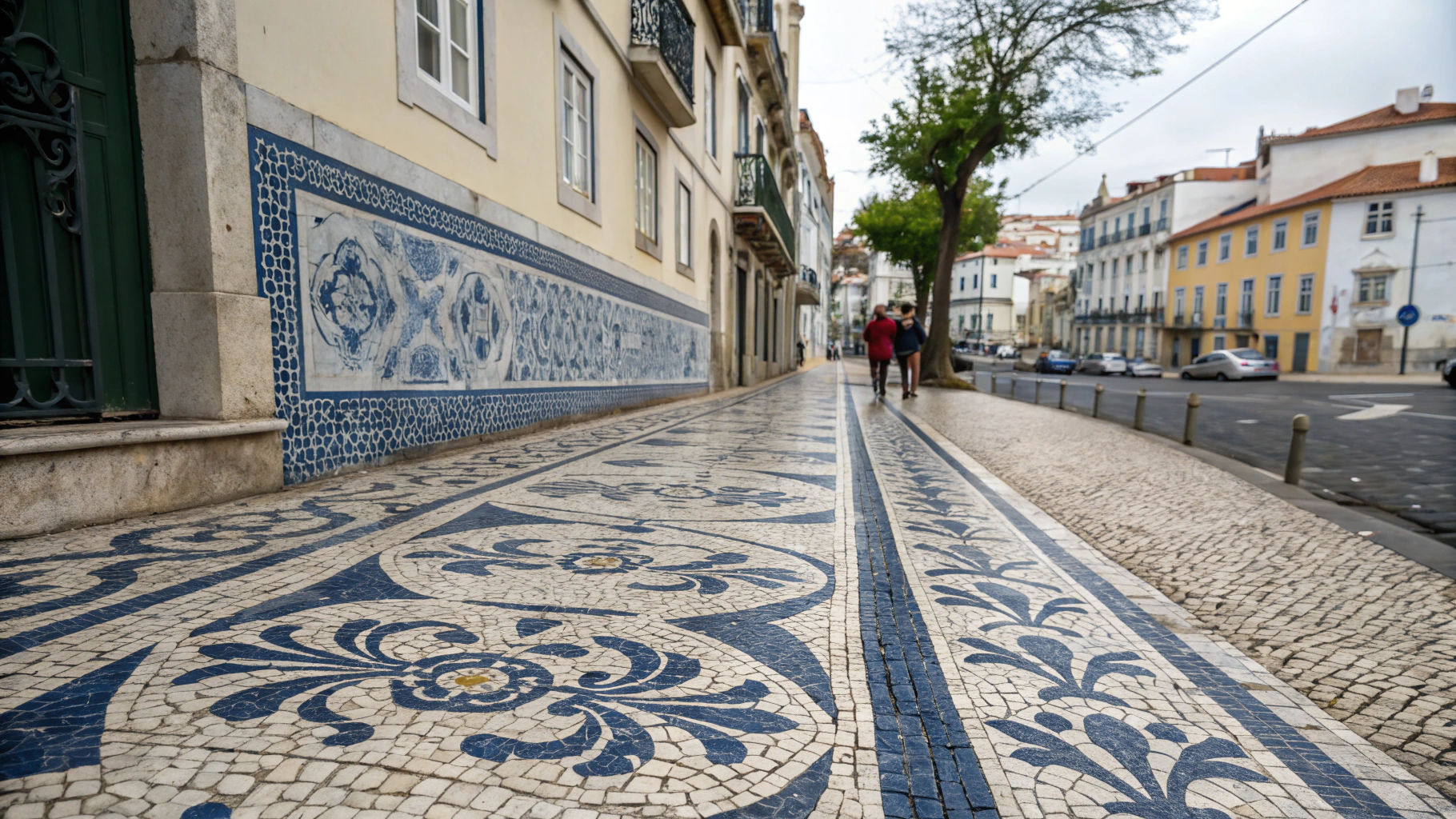
Lisbon has a way of making you feel like you’ve stumbled onto something the rest of the world hasn’t quite figured out yet. The hills, the light at four in the afternoon, the salt tang in the air from the Tagus — it all adds up to something I find genuinely hard to describe without sounding like a tourism brochure. And yet here I am, trying anyway.
I’ve spent a lot of time in this city over the years. I know which miradouros are worth the climb at 8am and which are overrun by tour groups by noon. I know where the best pastel de nata actually comes out of the oven and why Tram 28 is simultaneously the most charming and most frustrating thing in the city. This guide to the best things to do in Lisbon Portugal is the honest version — the one I’d write for a friend, not a press trip.
Whether you’ve got two days or ten, whether you want monuments or markets or music, Lisbon delivers. Here are twenty things I genuinely recommend, with a few caveats thrown in for free.
BLOCK_0
Explore Alfama — Lisbon’s Oldest Neighbourhood
Alfama survived the 1755 earthquake when most of the rest of Lisbon didn’t. It’s the city’s Moorish quarter, a dense tangle of whitewashed houses, laundry lines, and staircases that seem to lead everywhere and nowhere at once. I always start here, ideally early — before 9am, when the light is soft and the streets are mostly yours.
The neighbourhood is best explored without a map. Yes, you’ll get lost. That’s the point. Eventually you’ll pop out somewhere with a view, or stumble onto a woman hanging washing from a third-floor window, or hear a snatch of fado drifting from a ground-floor café. These are Alfama’s real highlights and they don’t appear on any top-ten list.
That said, there are anchors worth knowing. The Museu do Fado on Largo do Chafariz de Dentro is an excellent introduction to Portugal’s defining musical form — well-designed, affordable, and surprisingly moving even if you think you’re not a fado person yet. The São Vicente de Fora church has an 18th-century azulejo cloister that’s genuinely spectacular and far less visited than it deserves to be.
Hit the Miradouros Before the Crowds
Lisbon’s miradouros — its panoramic viewpoints — are among the best reasons to live with all these hills. But they’re not all equal, and the time you visit matters enormously.
Miradouro das Portas do Sol is my go-to. It sits right at the edge of Alfama, overlooking the rooftops and the river, with a statue of São Vicente (Lisbon’s patron saint) presiding over the whole thing. There’s a café with outdoor seating where I’ve sat for embarrassingly long stretches doing nothing useful. Arrive before 10am and it’s peaceful. After 11am, tour buses.
Miradouro de Santa Luzia is nearby — intimate, covered in azulejo panels, with a pergola draped in bougainvillea. It’s beautiful and somehow always slightly less crowded than Portas do Sol despite being about 50 metres away.
Miradouro da Graça is further up the hill and worth the extra effort. It has a small kiosk, a local atmosphere, and a view that puts the Castelo São Jorge in the middle of the frame like a painting. On weekday mornings, it’s mostly retired Lisbonetas playing cards.
Miradouro da Senhora do Monte is the highest of the main viewpoints and arguably the best panorama in the city — you can see all the way to the river mouth on a clear day. It requires a bit of a walk but rewards generously.
Visit Castelo São Jorge
The Moorish castle at the top of the hill is one of Lisbon’s most visited sites and, honestly, one of its most worth-it. The archaeological excavations inside have uncovered layers of Lisbon going back to the Iron Age, and the views from the ramparts are spectacular — particularly toward the Tagus.
I won’t pretend the castle itself is extraordinarily well-preserved. It isn’t — much of what you see is 20th-century restoration. But the site is genuinely impressive and the sheer drama of walking the battlements above the city makes the entry fee feel reasonable. Book tickets online in advance, especially in summer; the queue without a reservation can be brutal.
The peacocks wandering the grounds are a strange and pleasing bonus. Nobody mentions them in guidebooks but they’re very much a real thing.
Stroll Around Belém
Belém is about 6km west of the city centre, easily reached by tram 15E or by Uber. It’s where Portugal’s Age of Discovery era is most tangible — the monuments here were built to celebrate the voyages of Vasco da Gama, Bartolomeu Dias, and the other navigators who changed the world’s map in the 15th and 16th centuries. The neighbourhood deserves at least a half-day.
Torre de Belém is the postcard image of Lisbon — a 16th-century fortified tower standing at the edge of the Tagus, built in the ornate Manueline style. It’s smaller than photographs suggest (always the way), but beautiful up close. The queues in summer are long; I’d recommend visiting late afternoon when they thin out, or buying tickets online.
Mosteiro dos Jerónimos is the real showstopper. This UNESCO World Heritage monastery is one of the finest examples of Manueline architecture on earth — intricate stone carvings covering every surface, the cloisters a masterpiece of detail. Give yourself at least an hour inside. The church where Vasco da Gama is buried is free to enter; the cloister requires a ticket.
Padrão dos Descobrimentos — the Monument to the Discoveries — stands right on the waterfront: a huge marble sculpture of a ship’s prow with figures of navigators, poets, and cartographers climbing its sides. You can go inside and take a lift to the top for panoramic views. The mosaic compass rose on the ground in front of it is a perfect photo opportunity.
And then there’s Pastéis de Belém. The original pastel de nata bakery, operating since 1837, is a short walk from the monastery. Yes, the queue is long. Yes, it’s worth it. Order a couple at the counter, dust them with cinnamon and icing sugar, eat them warm. This is non-negotiable.
Experience Fado in Mouraria or Alfama
Fado is Portugal’s soul music — a genre built from longing, fate, and a particular bittersweet emotion the Portuguese call saudade. Hearing live fado in Lisbon is one of those experiences that can actually live up to the hype, if you’re in the right venue.
Clube de Fado in Alfama (Rua de São João da Praça) is one of the city’s most respected fado houses. The musicians are excellent, the atmosphere is serious — this is fado for people who care about fado, not a floor-show for tourists. It’s on the expensive side (dinner plus fado, expect €50-70 per person) but the quality justifies it.
Tasca do Chico in Bairro Alto is smaller and more intimate — a tiny, packed restaurant where the fado happens organically between bites of dinner. It seats about 25 people and books out weeks in advance. This is the one I send friends to when they want the real thing without the grand-venue formality.
In Mouraria — the neighbourhood just below Alfama, which is actually fado’s birthplace — several small bars host unpretentious fado sessions on weekend evenings. Wander around Largo do Intendente and you’ll find them. No reservations, no tourist surcharge, just music.
Walk Through Mouraria
Speaking of Mouraria — don’t just pass through it on the way to something else. This is Lisbon’s most historically layered neighbourhood: the old Moorish quarter, birthplace of fado, now a genuinely multicultural area where Bangladeshi and Chinese restaurants sit next to traditional tascas, and street art covers walls that were derelict a decade ago.
Largo do Intendente was one of the city’s more troubled squares for years. It’s been beautifully restored and is now one of my favourite spots in the city — surrounded by handsome 19th-century buildings, with a pleasant terrace café in the middle. The square has a relaxed, un-touristy feel that’s increasingly rare in central Lisbon.
The alleys above Mouraria, heading up toward Graça, have some of the best street food in the city — particularly during the Festas de Lisboa in June, when every neighbourhood sets up grills outside and the streets smell of charcoal and sardines.
Discover the National Tile Museum (Museu do Azulejo)
The Museu Nacional do Azulejo is one of those museums that genuinely surprises people. It’s housed in a former convent in the eastern part of the city, and its collection traces the history of Portuguese azulejo tiles from the 15th century to the present day. That sounds niche. It isn’t.
The centrepiece is a 23-metre-long azulejo panel depicting Lisbon’s waterfront before the 1755 earthquake — painted around 1738, it’s one of the most important historical documents the city possesses. Elsewhere, the museum’s Manueline chapel is extraordinary: every surface covered in painted tile and gilded woodwork, almost too much to take in.
I’d allow two hours here. It’s not a rush-through place. The museum is in Xabregas, easily reachable by Uber; the neighbourhood itself has some good coffee spots worth stopping at before or after.
Spend Time at MAAT
The MAAT — Museum of Art, Architecture and Technology — sits right on the Tagus waterfront in Belém, in a striking red-brick building that was once a power station. It’s one of those places where the building itself is as interesting as what’s inside.
The contemporary art collection focuses on digital and media art, which isn’t everyone’s thing but is done well here. The rooftop of the new wing — a white curved structure by architect Amanda Levete — is worth visiting purely for the panoramic river views. It’s free to walk across and often overlooked by visitors focused on the exhibitions.
MAAT pairs well with a Belém morning: Jerónimos first, then Tower, then a late lunch in Belém followed by MAAT in the afternoon when the light on the river is at its best.
Browse the Berardo Collection Museum
Also in Belém, the Museu Coleção Berardo is housed in the Centro Cultural de Belém and contains one of the best collections of modern and contemporary art in Portugal. Warhol, Picasso, Francis Bacon, Louise Bourgeois — it’s a serious collection, not a provincial gallery, and it’s often free or very low cost.
It tends to be far less crowded than the monuments nearby, which makes no sense to me given the quality. If you have any interest in 20th-century art, don’t skip it because you’re tired from the monasteries. It’s right there.
Visit the Museu Nacional de Arte Antiga
For older work, the Museu Nacional de Arte Antiga (National Museum of Ancient Art) in the Lapa district is the country’s largest museum and one of its finest. The collection runs from medieval Portuguese painting through Flemish masters, Japanese Namban screens, and a dazzling treasury of gold and silver religious art.
The star piece is Nuno Gonçalves’s Panels of St Vincent — a 15th-century altarpiece considered one of the greatest Portuguese paintings in existence, showing what’s believed to be a portrait of Lisbon society circa 1470. Scholars have been debating who’s who in the picture for 500 years. It’s the kind of painting you stand in front of for longer than you expect to.
The museum’s garden terrace overlooking the Tagus is also one of the best spots in the city for a quiet coffee. Not many visitors find it, which suits me fine.
Wander Through Chiado and Bairro Alto
Chiado is Lisbon’s literary and cultural neighbourhood — the home of Fernando Pessoa (there’s a statue of him outside his favourite café, A Brasileira), Livraria Bertrand (the world’s oldest operating bookshop, founded in 1732), and some of the best independent shopping in the city.
It blends seamlessly into Bairro Alto, the hilltop neighbourhood that comes alive at night. During the day, Bairro Alto is quiet and residential. From about 9pm, the narrow streets fill with people drinking outside tiny bars, the music spills out, and it turns into the kind of evening that ends later than you planned.
For shopping in Chiado, I’d point you toward Rua Garrett for independent boutiques and the Embaixada concept store in Príncipe Real (nearby, in a stunning 19th-century palace) for Portuguese design brands.
Explore Príncipe Real
Just above Bairro Alto, Príncipe Real is one of Lisbon’s most elegant neighbourhoods — 19th-century townhouses, antique shops, garden squares, and a weekend organic market that draws the city’s foodie crowd. It feels slightly removed from the tourist frenzy elsewhere and is the neighbourhood where I’d choose to stay if budget allowed.
The Jardim do Príncipe Real — with its enormous century-old cedar tree providing shade over the whole square — is a perfect spot to sit with a coffee and do nothing for an hour. Which is, incidentally, one of the best things to do in Lisbon.
Eat and Drink at Mercado da Ribeira / Time Out Market
The Time Out Market inside Mercado da Ribeira is a food hall concept that’s been copied across the world, but the original in Lisbon is still one of the best. Dozens of stalls from the city’s top restaurants in one cavernous, buzzing space — you can eat everything from traditional bacalhau to contemporary Portuguese cuisine to excellent sushi within a hundred metres.
I’d go for lunch on a weekday if possible. Weekend evenings are genuinely very crowded and part of the pleasure is being able to sit and take stock. The traditional market hall at the front of the building (selling fish, vegetables, flowers) is also worth a look — it runs in the mornings and is a working market untouched by the food hall makeover.
Hunt for Treasure at Feira da Ladra
Lisbon’s famous flea market runs on Tuesdays and Saturdays in Campo de Santa Clara, in the shadow of the São Vicente de Fora church in Alfama. It’s a proper sprawling flea market — not a curated artisan fair — with everything from genuine antiques to absolute junk, sold by a mix of professional dealers and people who’ve clearly just emptied their attic.
I’ve found beautiful azulejo tiles, vintage Portuguese travel posters, 1960s furniture, and completely useless objects I bought purely on impulse. Go in that spirit. Wear comfortable shoes. Arrive before 10am for the best pickings. There’s a morning cluster of serious dealers who set up at dawn and pack up by noon.
The Tuesday market is smaller but sometimes better for deals since there are fewer tourists competing for the same finds.
Take a Day Trip to Sintra
Sintra is 40 minutes by train from Lisbon’s Rossio station (trains run every 20 minutes, tickets cost about €2.40 each way), and it’s one of those places that genuinely deserves its UNESCO World Heritage status. Hilltop palaces, romantic gardens, dense forest, sea views — it’s unlike anywhere else in Portugal.
The Palácio Nacional da Pena is the main attraction — a 19th-century royal palace painted in vivid yellow and red, perched at the top of a granite peak above the clouds. It looks like something from a fairytale and even I, someone who’s been many times, still finds it stunning. Get there when it opens at 9:30am.
The Quinta da Regaleira is my favourite Sintra site — a Gothic manor house and garden with initiatory wells (spiral staircases descending into the earth, used for Masonic rituals), grottos, and a lake. It’s strange and beautiful and far less visited than Pena. The Moorish Castle (free with Pena ticket) offers extraordinary views across the whole of Sintra’s forested hilltops.
Avoid weekends in July and August if you possibly can. The village is small and the main sites queue for hours. A Tuesday in May or October is a completely different experience.
Visit LX Factory on a Sunday
LX Factory is a creative cluster set in a former 19th-century industrial complex in Alcântara, under the shadow of the 25 de Abril Bridge. During the week it’s home to design studios, restaurants, and a good independent bookshop (Ler Devagar, with a two-floor mezzanine and a bicycle hanging from the ceiling).
On Sundays, it hosts a weekly market: artisan food, vintage clothing, local design, live music. It’s genuinely good — not the sanitised version of a market but a place with actual character. The restaurants along the main lane serve good brunch from about 11am onwards, and the whole thing has a pleasantly unhurried Sunday energy.
It’s easily combined with Belém — the two are about 10 minutes apart on Tram 15E.
Ride Tram 28 — with Honest Expectations
Look, I have to talk about Tram 28. It winds through some of the most beautiful parts of Lisbon — Alfama, Graça, Estrela — and it’s been in every photograph of the city for decades. The honest truth is that it’s become a victim of its own fame.
In high season, the queues at Martim Moniz (the main boarding point) can stretch to 45 minutes. Once you’re on, the tram is packed far beyond comfort, and pickpockets are a known problem. The journey itself is genuinely lovely — the tram tilts through streets so narrow it almost scrapes the buildings on both sides — but it’s hard to appreciate when you’re standing in someone’s armpit.
My recommendation: if you want to ride it, go very early in the morning (first tram departs around 6:30am) or in the evening around 8-9pm when tourist numbers drop. Or, alternatively, accept that the vintage trams on Line 15E (to Belém) and Line 12 (from Praça do Comércio up to Alfama) offer similar character with much shorter queues. It’s the same historic yellow tram. Nobody queues for those.
Take a Sunset Boat on the Tagus
I don’t mean the big tourist boats, though those are fine. I mean a traditional barco rabelo or a smaller sailing tour departing from the riverfront near Cais do Sodré. An evening sailing on the Tagus with the city lit up behind you is one of the most spectacular ways to see Lisbon.
Several companies offer two-hour sunset cruises that include local wine. Book in advance in summer. The light off the water in late afternoon — the luz that Lisbon poets have been writing about for centuries — really does live up to the reputation.
Take a Ride on the Elevadores
Lisbon has three historic elevadores (funicular railways) that are technically public transport but feel like something from another era. The Elevador da Bica on Rua da Bica de Duarte Belo is the most photogenic — a steep yellow funicular descending through a narrow street, with azulejo tiles on either side. The Elevador da Glória connects the Baixa with Bairro Alto. The Elevador do Lavra is the oldest (1884) and the least-visited.
They cost the same as a bus ticket and are a practical way to get uphill. But mostly I love them because they’re a reminder that Lisbon solved its topography problem with small, beautiful funicular railways rather than just building escalators.
Eat Properly in Lisbon
This probably should have been first. Lisbon’s food scene has transformed over the past decade — it went from “good traditional food, some great restaurants” to “genuinely one of Europe’s most exciting cities to eat in.” The Michelin stars are part of that, but the everyday food is what gets me.
A petisco lunch at a Mouraria tasca (small plates, wine by the glass, lingering for two hours) is one of the city’s great pleasures. Bacalhau (salt cod, with 365 allegedly different recipes) is everywhere and genuinely excellent when properly cooked. A Cevicheria in Príncipe Real does the best ceviche in Portugal. The Time Out Market for a quick rotisserie chicken from O Talho at 1pm — perfect.
For pastéis de nata beyond Belém: Manteigaria on Rua do Loreto in Chiado does them fresh from the oven continuously, with a shorter queue than the Belém original. The coffee is also better. (I’ll accept this is a controversial opinion.)
Practical Notes for Visiting Lisbon
Getting around Lisbon is easiest by a combination of Uber (cheap, plentiful, drivers speak enough English) and walking. The Metro is useful for longer distances. Trams and elevadores are more for experience than efficiency.
The Lisbon city guide on Visitus has more detail on neighbourhoods, hotels, and logistics. If you’re planning a short visit, the three-day Lisbon itinerary gives you a structured framework to build from.
The best months are April-June and September-October. July and August are hot (35°C+), crowded, and expensive — they’re not the best months to visit unless beach weather is your priority. October in particular is extraordinary: warm days, thin crowds, the light going amber-gold in the afternoons.
One last thing: bring good walking shoes. Lisbon is a beautiful city built entirely on hills paved with slippery cobblestones. This is not the place for new trainers or anything with a heel.
BLOCK_1
What are the best things to do in Lisbon for first-time visitors?
Is Tram 28 in Lisbon worth it?
How many days do you need in Lisbon?
What is the best neighbourhood to stay in Lisbon?
When is the best time to visit Lisbon?
BLOCK_2
BLOCK_3