
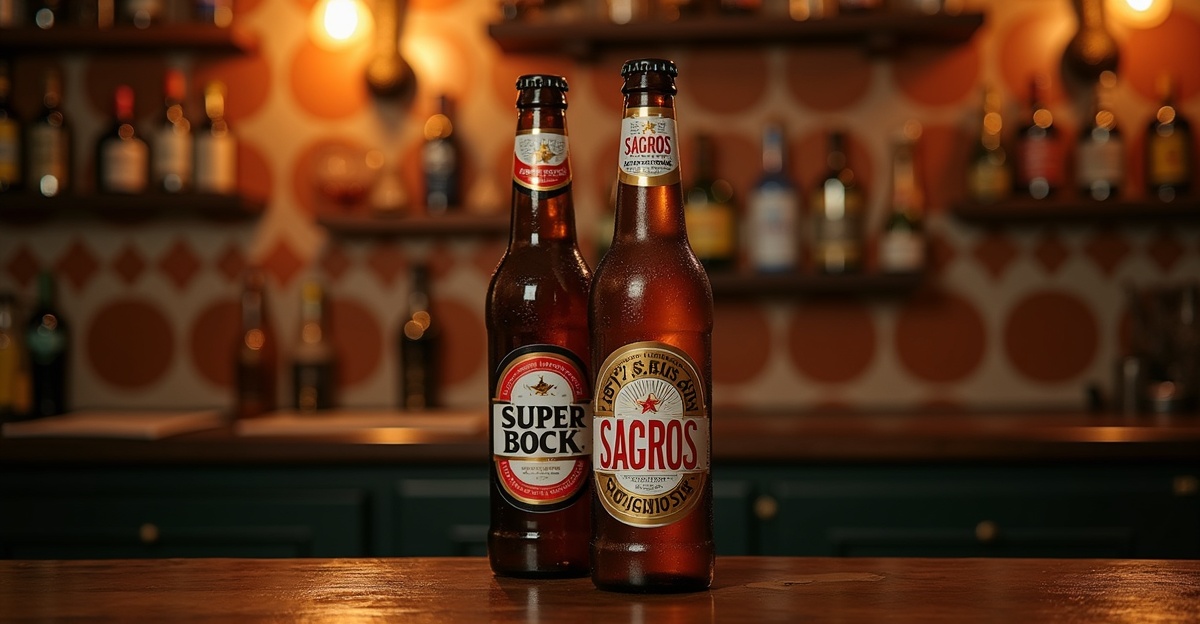
The question you will be asked, at some point, in a Portuguese bar is: Sagres ou Super Bock? It will be delivered quickly, with no preamble, on the assumption that you have preferences and that they are known to you. If you hesitate, the barman will tell you which one to have — and the answer will depend on whether you’re in Lisbon (Sagres) or Porto (Super Bock).
This is not a meaningless distinction. The regional allegiance to these two lagers is genuinely felt, somewhat irrational, and entirely charming. Understanding it before you arrive puts you slightly ahead of most tourists.
There is, of course, more to Portuguese beer than this binary. But it’s the right place to start.
BLOCK_0
The Two Portuguese Beer Giants
Sagres
Sagres is the Lisbon beer — produced by the Heineken-owned Central de Cervejas e Bebidas, brewed primarily in Vialonga near Lisbon. The name references the southwestern tip of Portugal, the launch point of the Age of Discovery. The label is in red and white.
In character, Sagres is a clean, crisp European lager — low bitterness, light body, refreshing cold. At 5% ABV, it’s standard lager strength. It’s not a complex beer. It’s a beer that performs its function well: cold, in a hot country, in a small glass (the imperial, roughly 200ml), it is exactly what you want.
The “imperial” format — the small glass — is specific to Lisbon and the south. In Porto and the north, the same small glass is called a “fino.” This matters because asking for the wrong word in the wrong city is the kind of mistake that marks you immediately as a tourist, which is fine, but it’s worth knowing.
Sagres also produces a Sagres Preta (dark lager) and seasonal specialties. The Preta is worth trying — a slightly caramelised, approachable dark lager that’s underrated.
Super Bock
Super Bock is the Porto beer — produced by Unicer, now owned by Carlsberg, and brewed in Leça do Balio near Porto. The label is blue and white. It has been the more commercially successful of the two brands in export markets, which occasionally generates friction with Lisboners.
Super Bock is slightly more malt-forward than Sagres — a fraction sweeter, slightly fuller body. The difference is small enough that in blind tastings most people cannot reliably distinguish them. This does not stop the debate.
Super Bock produces an extensive range: the standard lager (Super Bock Original), a green label alcohol-free version, a Stout (surprisingly decent), and a range of craft-adjacent sub-brands. The Super Bock Abadia, their abbey-style ale, is a more interesting beer than either of the standard lagers.
Which One to Choose
The pragmatic answer: drink whatever is on tap locally. In a Lisbon restaurant, Sagres is usually fresher. In a Porto bar, Super Bock is. Freshness matters more for lager than brand loyalty.
The Portuguese Drinking Culture Around Beer
Portugal has a specific relationship with beer that doesn’t map cleanly onto British, Belgian, or German drinking cultures. Beer here is primarily an accompaniment to food, a social lubricant on terraces, and an afternoon refreshment — not the object of the occasion in the way a craft beer tasting might be in London.
The typical format is the bifanas (pork sandwich) plus imperial combination — a pairing so deeply embedded in Lisbon street food culture that the two things are almost inseparable. Cervejarias (literally beer houses) are traditional Lisbon restaurants that serve seafood and meat alongside beer, historically without wine lists. This tradition dates to the early 20th century and the best cervejarias — Cervejaria Trindade, Cervejaria Ramiro — are among the finest restaurants in the city.
The petiscos-and-beer tradition is equally important in Porto, where small neighbourhood tascas serve cheap food and local beer to working-class clientele in a format that has barely changed in 60 years. These places are increasingly rare in the gentrifying city centre, but they’re worth seeking out.
Craft Beer in Portugal: The Lisbon and Porto Scene
The Portuguese craft beer movement started late relative to the UK, Belgium, or the US — roughly 2012-2015 for the first serious wave of microbreweries — but it has developed quickly and with serious quality.
Lisbon’s Craft Beer Scene
Lisbon’s craft beer scene is concentrated in a few neighbourhoods: Mouraria, Intendente, Bairro Alto, and the newer bars in Alcântara and Marvila (Lisbon’s east side, home to several brewery taprooms).
Dois Corvos (Two Ravens) is the brewery that put Lisbon on the craft beer map. Founded in 2013 in Marvila, they produce everything from IPAs and pale ales to barrel-aged sours and experimental saisons. The taproom is one of Lisbon’s best beer destinations: good food, excellent beer, relaxed atmosphere. The seasonal releases sell out quickly.
Cerveja Musa (Mouraria): a smaller operation with an excellent taproom and a range of approachable craft beers. The location in Mouraria — one of Lisbon’s oldest and most characterful neighbourhoods — makes a visit here part of a neighbourhood walk rather than a dedicated beer pilgrimage.
Mean Sardine (Marvila): primarily a bottle shop and taproom, not a brewery, but one of Lisbon’s best curated selections of Portuguese and international craft beer.
For a craft beer bar without a taproom connection: By the Wine in the Chiado serves a good Portuguese craft selection; Hoppy Hours in Príncipe Real focuses on the better domestic craft breweries.
Porto’s Craft Beer Scene
Porto’s craft scene is smaller than Lisbon’s but includes several producers of real quality.
Letraria (Craft Beer Garden, Porto): a large outdoor beer garden in the city centre serving a well-curated selection of Portuguese craft beers. A good first stop for an overview of what’s being produced domestically.
Catraio Craft Beer Shop (Porto): consistently regarded as Portugal’s best craft beer bottle shop — excellent selection, knowledgeable staff.
Praxis (Porto): a brewery and taproom producing reliable IPAs, porters, and seasonal beers in a converted industrial space.
Nortada (Porto): one of the larger Portuguese craft operations, distributing nationally. Their IPAs are among the best widely available Portuguese craft beers.
Regional Beers Beyond the Two Giants
Outside the Sagres/Super Bock duopoly, a few regional beers are worth knowing:
Coral (Madeira): the island’s own beer, produced in Madeira, sold almost exclusively there. A decent pilsner-style lager that tastes better when you’re sitting above the Atlantic in Funchal than it would anywhere else. Classic terroir effect: context is everything.
Manta (Algarve): a craft lager produced in the Algarve, positioning itself as the regional beer of the south. Still finding its identity but improving.
Sovina (Porto): an established independent brewery that predates the craft movement and produces a well-regarded pilsner and a dark malt beer. Available in some Porto bars as an alternative to Super Bock.
What to Eat With Portuguese Beer
The classic pairings work for a reason. Bifanas (thin marinated pork sandwiches in a crusty roll) with a cold lager is the Lisbon standard — cheap, satisfying, completely correct. The slight sweetness of the pork marinade (usually wine-based with garlic and bay leaf) works against the clean bitterness of a cold Sagres.
Prego (beef sandwich) is the beefier alternative — often served in a soft bun with garlic butter and occasionally a fried egg. Same principle: beer cuts the richness.
For seafood: the traditional cervejaria pairing of cold lager with gambas (shrimp), amêijoas (clams), or percebes (barnacles, the strange expensive delicacy that tastes strongly of the Atlantic ocean) is entirely correct. The shellfish tradition in Lisbon cervejarias grew up alongside the beer culture for good reason.
For craft beer pairings: IPAs with bacalhau à brás (shredded salt cod with eggs and potato crisps); dark ales with chouriço and smoked meats; sours with goat cheese from the Alentejo.
How to Order Beer in Portugal
A few language notes that will save you from looking confused:
- Imperial (Lisbon, south): small draft lager, approximately 200ml
- Fino (Porto, north): the same small glass called by a different name
- Caneca: 500ml draft
- Garrafa: bottled beer
- Com gás / sem gás: sparkling / still (for water, but occasionally asked about beer in tourist contexts)
- Uma cerveja, se faz favor: “a beer, please” — the baseline request
Asking for a “beer” in English will get you served, but using the local format word gets you a warmer response and usually a colder beer — bars tend to give tourists the glass from the warmer part of the tap run, for reasons that are unclear but consistent.
BLOCK_1
Frequently Asked Questions About Portugal Beer
What is the most popular beer in Portugal?
Super Bock and Sagres are the two dominant Portuguese lagers, and between them they account for the majority of beer consumed in Portugal. Super Bock has a slight edge in overall sales volume, but Sagres dominates in Lisbon and the south. Regional preference is strongly felt: ordering Super Bock in a Lisbon bar or Sagres in a Porto bar will occasionally generate mild commentary.
What is the difference between Sagres and Super Bock?
Both are clean European-style lagers at approximately 5% ABV. Super Bock is slightly more malt-forward and marginally fuller-bodied; Sagres is fractionally crisper and lighter. The practical difference is small — in blind tastings, few people can reliably distinguish them. The more significant difference is regional: Sagres is the Lisbon beer, Super Bock is the Porto beer, and this cultural distinction matters to the Portuguese even if the liquid difference is minor.
Is there good craft beer in Portugal?
Yes, and the scene is developing quickly. In Lisbon, Dois Corvos (Marvila) is the benchmark producer — their IPAs, sours, and seasonal beers are among the best in Iberia. Cerveja Musa in Mouraria and Nortada in Porto are other quality producers. For the best bottle shop selection, Catraio in Porto is consistently recommended. The Portuguese craft scene is still small compared to the UK or Belgium, but quality is high and the taproom experience in Lisbon and Porto is excellent.
What does “imperial” mean in Portuguese beer culture?
An imperial is the standard small draft beer glass in Lisbon — approximately 200ml. This specific format and name is used in Lisbon and the south. In Porto and northern Portugal, the identical small glass is called a “fino.” If you ask for an imperial in Porto or a fino in Lisbon, you’ll be understood but gently corrected. Both refer to the same format: a small, cold, quickly consumed glass of lager — the Portuguese approach to making sure the beer is always fresh and cold.
Is Portugal known for beer or wine?
Portugal is primarily known internationally for wine (particularly Port wine, Vinho Verde, and Alentejo reds) and liqueurs (ginjinha, licor beirão). But the Portuguese themselves drink significant amounts of beer — more per capita than the French or Italians. Beer culture in Portugal is everyday and unpretentious, closely tied to food culture (the cervejaria restaurant tradition) and social rituals. The recent craft beer movement has given Portugal a more internationally recognisable beer identity, but mainstream lager remains the dominant format.
BLOCK_2
BLOCK_3
BLOCK_4