
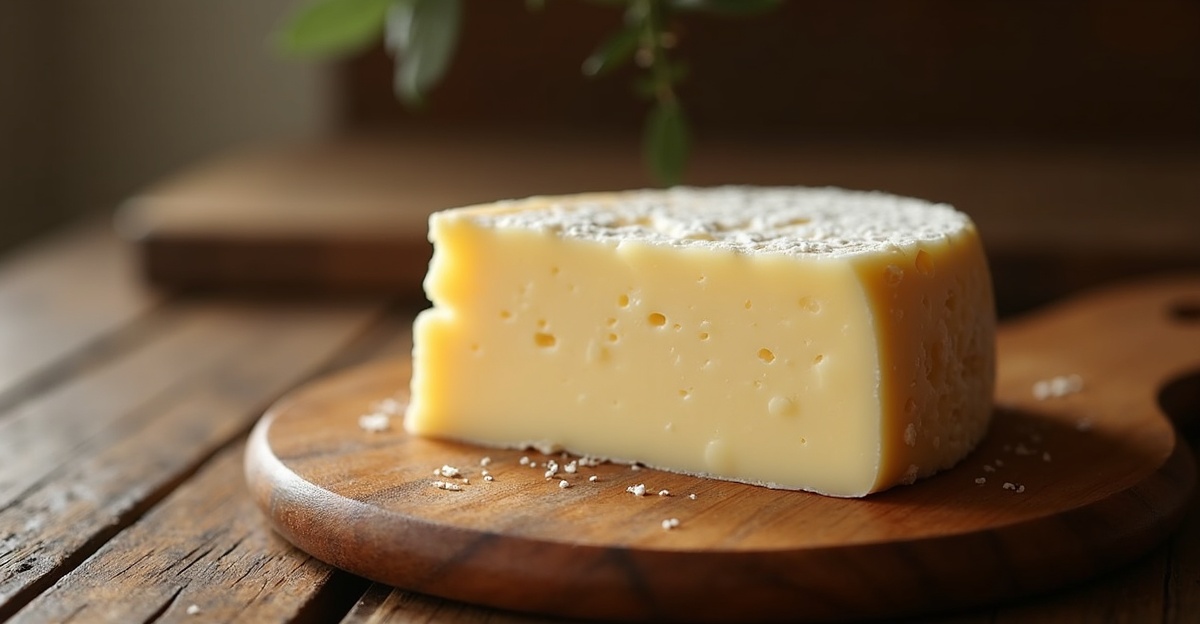
The first rule of queijo de Azeitão is temperature. Do not eat it cold. This applies to most cheese but to Azeitão it applies especially — cold, the runny interior firms up, the flavour retreats, and you miss the point entirely. Room temperature, ideally having sat out of the refrigerator for at least an hour, is when the cheese does what it’s meant to do: the paste underneath the thin rind is almost liquid, intensely savoury with a mild acidity, and carries the specific flavour of cardoon thistle coagulation that makes this cheese unlike almost any other.
I’ve tried to explain this flavour to people who haven’t had it. The best I’ve managed: like a very good Époisses crossed with something earthier, less barnyard, more wild herb and rock. That’s not quite it either. The only real explanation is the cheese.
BLOCK_0
What Queijo de Azeitão Is
Queijo de Azeitão is a small (150-250g) soft cheese made from raw sheep’s milk in a protected zone covering the municipalities of Setúbal, Sesimbra, and Palmela on the Setúbal Peninsula south of Lisbon. It has PDO (Protected Designation of Origin) status under EU regulations, meaning the name “Azeitão” can only legally be used for cheese made in this specific zone using the designated method.
The cheese is made exclusively from the milk of Merino Branco and Campaniça sheep raised in the production zone. The coagulant is a thistle flower extract (cardo) — a method used in several of Portugal’s finest cheeses and quite different from the animal rennet used in most European cheese production. The thistle flower produces a softer, more complex coagulation that contributes significantly to the final flavour.
Production is small-scale by design — the PDO rules require handmade production, and the number of certified producers is limited to a few dozen operations, most of them family-run.
How Queijo de Azeitão Is Made
The production process starts with fresh raw sheep’s milk, which is warmed slightly and combined with the prepared thistle flower extract. Coagulation takes several hours at ambient temperature — slower than animal rennet, producing a softer and more fragile curd.
The curd is hand-ladled into small moulds and drained lightly, then the cheese is wrapped in cloth and salted. The pressing is minimal — these are intentionally soft, almost fluid cheeses rather than firm ones. Maturation is short, typically 20-30 days in the production zone’s climate. The finished cheese has a thin, wrinkled yellowish rind and an interior that ranges from slightly yielding when young to nearly liquid when mature.
The season matters: spring cheeses (when sheep are feeding on the new grass) are generally considered the finest, with the richest, most complex flavours.
How to Eat Queijo de Azeitão
Bring it to room temperature first. This bears repeating.
The traditional method: cut off the top (the rind cap), scoop out the interior with a knife or small spoon, spread on good bread. The rind is edible and many people eat it; others prefer just the paste. If the cheese is properly runny, you may need to treat it almost like a dip — holding the cheese in one hand and using the bread to scoop from the cut-open top.
Classic accompaniments: fresh white bread (ideally bolo do caco or cornbread), a glass of chilled vinho verde or a small glass of aged Moscatel de Setúbal. The slight sweetness and acidity of the Moscatel is an exceptional counterpoint to the intensity of the cheese.
Wine pairing: for those who prefer red wine, a light Alentejo red works well. The cheese is also excellent with honey and walnuts.
Where to Buy Azeitão Cheese
The Friday market in Vila Nogueira de Azeitão: the best place to buy directly from producers. The market runs every Friday morning and includes multiple Azeitão cheese sellers who make the cheese themselves. Arrive before 10am for best selection.
The producers directly: Fernando & Simões and Quinta do Anjo Agricultural Cooperative are among the established certified producers. Some accept visitors.
Setúbal market: the daily market in Setúbal includes certified Azeitão cheese sellers most mornings.
Lisbon and Porto delis: good delicatessens in both cities stock Azeitão cheese, but freshness matters — buy it as close to the source as possible. The cheese is always better in the production zone.
Online: some Portuguese food mail-order services ship Azeitão cheese. The quality is good but freshness is compromised compared to buying at the Friday market.
Other Portuguese PDO Cheeses Worth Knowing
The Azeitão cheese is one of several extraordinary Portuguese soft cheeses made using the thistle flower method:
Queijo Serra da Estrela — the most famous, made from Bordaleira sheep milk in the Serra da Estrela mountains. Larger than Azeitão, richer, with a more intense flavour. Also runny when mature.
Queijo de Évora — a smaller, firmer cheese from the Alentejo, made the same way but pressed more firmly. Aged versions become very hard and intensely flavoured.
Queijo de Nisa — from the northern Alentejo, between Évora and Portalegre in character.
A one-day Portuguese cheese tour from Lisbon: drive south to Azeitão for the Friday market (leave Lisbon at 8am, arrive for market opening), then continue to Setúbal for lunch, then return via the Arrábida coast. Cheese, wine, dolphins if you time it right.
BLOCK_1
Frequently Asked Questions About Cheese Azeitão
What does queijo de Azeitão taste like?
Intense, savoury, and complex — with a mild acidity, a slight pungency from the rind, and an unusual herbal quality from the wild thistle flower coagulation. The texture ranges from yielding to almost liquid when fully mature at room temperature. It’s unlike most soft cheeses in the intensity of flavour and the distinctiveness of the coagulation character. The best comparison is a well-matured Époisses but earthier and more mineral.
Where can I buy authentic Azeitão cheese near Lisbon?
The Friday market in Vila Nogueira de Azeitão (40 minutes south of Lisbon) is the best source — direct from producers, always fresh, widest selection. The Setúbal daily market is a reliable alternative. Good Lisbon delicatessens also stock it, though freshness is better closer to the source.
Is Azeitão cheese made from sheep’s milk?
Yes. Queijo de Azeitão is made exclusively from raw sheep’s milk — specifically from Merino Branco and Campaniça sheep raised in the Setúbal, Sesimbra, and Palmela municipalities. The milk is coagulated using wild cardoon thistle flower extract, not animal rennet, which contributes significantly to the cheese’s distinctive character. This is a requirement of the PDO specification.
How long does queijo de Azeitão last?
Queijo de Azeitão has a short shelf life — typically 30-60 days from production when refrigerated. Once opened, it should be consumed within 2-3 days. When buying at a market, ask the producer when the cheese was made. Buy it as close to the production date as possible for the most complex flavour.
What wine pairs with Azeitão cheese?
The classic local pairing is Moscatel de Setúbal — the fortified wine produced in the same region. An aged 20-year Moscatel and a mature Azeitão is one of the better food-and-wine pairings in Portugal. For non-fortified wine: a chilled vinho verde handles the richness well. A light Alentejo red is also good.
BLOCK_2
BLOCK_3